




 Contact The Editor
 Articles By This Author
A man walking through a city park happens upon a little boy sobbing uncontrollably. "Are you hurt?" the man asks.
"No," the boy whimpers. "I'm playing hide-and-seek with my friends."
The man nods with compassionate understanding. "And you aren't able to find them?"
"No," wails the boy. "I went to hide, and my friends didn't try to find me."
We never really stop being children, do we? And we know all too well the feeling of FOMO. Indeed, our collective Fear of Missing Out has only gotten worse; social media propagates the misperception that everyone else in the world is living a life of unrelenting excitement, happiness and pleasure while we muddle through our humdrum lives.
But there's something even worse: FOBMO -- The Fear Of Being Missed Out. . More agonizing than the prospect of not being in the right place at the right time is the specter of being consciously excluded or thoughtlessly overlooked.
Hence, this week's addition to the Ethical Lexicon:
Athazagoraphobia (a*thaz*a*gor*a*pho*bi*a/ uh-thaz-uh-gor-uh-FOH-bee-uh) noun
The fear of being forgotten or ignored.
Perhaps the most deep-rooted of all human needs is the desire to be valued. We want to feel that we are important, that our lives matter, that we are making a difference. This can be a healthy desire when it motivates us to contribute positively to our communities and our world.
But, too often, we look to the wrong people for affirmation. When we do, we make ourselves subject to their value system, regardless of whether or not their system is based on sound and worthy values.
In her delightful TED talk, bestselling author Susan Cain explains how the industrial revolution transformed the way we approach social ranking. Back when most people lived out their lives in small, rural communities, they had plenty of time to get to know their neighbors by assessing character and evaluating worth.
With the mass influx into large urban centers, however, the sheer number of people we encounter daily requires us to make faster judgments. Perforce, charisma has become the currency of evaluation, even though there is zero correlation between extroversion and either competence or character.
The fallout is distressing. Not only does snap judgment incline us toward superficiality in our decision-making, but it also encourages the superficiality of ideas, since the most attention-getting notions may be the least likely to pay off in the end. Remember when Theranos promised early detection of cancer and diabetes? Or how Google Glasses and Hoverboards would change our world? Yet none of these instructive examples curb our irrational eagerness to jump on trains that never leave the station.
Why do we remain so willing to make ourselves dependent on the judgment of strangers? Perhaps the proliferation of social media gurus has caused us to lose confidence in ourselves.
Rather than relying on the madness of crowds, better to cultivate our own judgment, our own understanding and our own circle of trusted advisors. When we chart a course guided by ethical values and a reliable moral compass, people worth impressing will take notice and readily welcome us into their tribe. And that is worth more than an infinity of fly-by-night followers or smiling emojis.
Rather than enslaving ourselves to the shallow offerings of influence peddlers, better to build upon the foundations of time-tested wisdom. As the sages taught: Be a follower of lions, not a leader of foxes. By doing so, we take responsibility not only for our own fate but for the culture that we help take shape around us.
One simple mindset shift is to articulate daily our commitment to resisting the delusions of popular culture:
• My mission is to succeed by providing value.
• My purpose is to create, contribute and serve.
• My quest is to earn loyalty.
• My benchmark is to improve over yesterday.
• My community is measured by quality, not quantity. To escape the diagnosis of athazagoraphobia, we need to stop trying to impress people who are impressed for the wrong reasons and start channeling our efforts toward making a meaningful impact on the world we live in. As Benjamin Franklin said: "If you would not be forgotten, as soon as you are dead and rotten, either write things worth reading, or do things worth writing."
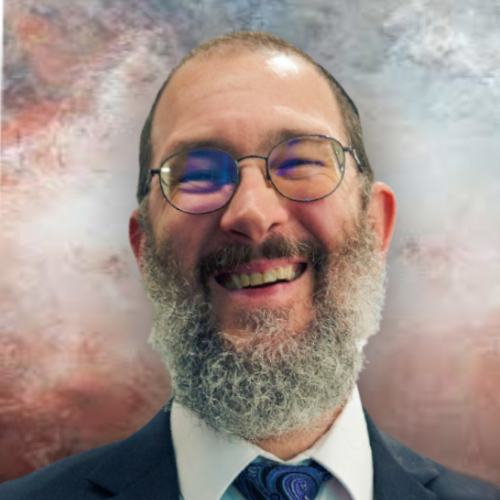
Rabbi Yonason Goldson graduated from the University of California at Davis with a degree in English, which he put to good use by setting off hitchhiking cross-country and backpacking across Europe. He eventually arrived in Israel where he connected with his Jewish roots and spent the next nine years studying Torah, completing his rabbinic training as part of Ohr Somayach's first ordination program. After teaching yeshiva high school for 23 years in Budapest, Hungary, Atlanta, Georgia, and St. Louis, Missouri, Rabbi Goldson established himself as a professional speaker and advisor, working with business leaders to create a company culture built on ethics and trust. He has published seven books and given two TEDx Talks, is an award-winning host of two podcasts, and writes a weekly column for Fast Company Magazine. He also serves as scholar-in-residence for congregations around the country.
Previously:
• Eyes wide shut
• Increase performance by turning into the wind
• Balancing the Equation of Intentions vs. Outcomes
• To be Human is to be Exceptional
• If You Get Where You're Going, You've Taken the Wrong Road
• Think Twice Before You Take Advice
• Taking intellectual humility seriously
• What are we?
• Are we Pillaging our own Moral Depository?
• Why Sharp Tongues Lose the War of Words
• Good Intentions Never Prevail Over Cold Reality
• Sarcastic Wit Carries Too High a Cost
• Character, not as a bank account. Rather, an investment portfolio
• Are We Programming Ourselves Out of Existence?
• The bigger they come, the harder we try to make them fall
• How to Transform Fallacies Into Actionable Reality
• How to make life worth living --- no, REALLY!
• What Do Opposites Attract? Truth and Wisdom
• Groucho Marx and Embracing Tension
• Toward a more civil civilization
• Break Down Barriers of Thought to Build Towers of Innovation
• 'Tis the Season for Reflecting Beyond your Reflection
• Why Antisemitism Is Not Just a Jewish Problem
• The rank stupidity of 'Just let it go'
• To create a functioning, biblically-based civilization
• The difference between optimism and hope
• The Next Piece of the Puzzle Might Fill the Hole in Your Heart
• Self-Esteem Isn't Given -- It's Earned
• Remember the Past to Promote a Successful Future
• Are We Making Failure the Price of Success?
• Demoralization Is More About Culture than Feelings
• The Lesson We're Missing From the Death of Charlie Kirk
• Invest in Your Own Success by Building Up Others
• The Most Valiant Heroes Fight on a Different Battlefield
• How Pundits Came to Give Punditry a Bad Name
• The Wisdom of Knowing What You Don't Know
• Success Thrives in the Light of Purpose and Passion
• When Seeking Peace, Don't Release the Dogs of War
• Greta Thunberg Sails Toward Moral Hypocrisy
• Checking More Boxes Is Not the Solution
• Why Sometimes NOT Seeing Is MORE Believing
• A Healthy Diet for the Brain Promotes Ethical Clarity for the Mind
(COMMENT, BELOW)