




 Contact The Editor
 Articles By This Author
"Am I qualified to express opinions about theology? Maybe, maybe not. But I do less damage speaking about religion than some clergy do when they speak about politics."
That remark has stuck in my head for 30 years since I heard it from Dr. David Luchins, political science professor and one-time advisor to Senator Daniel Patrick Moynihan and a national vice chair of Democrats for Nixon. More's the pity that President Donald Trump didn't respond with it, or something like it, when he launched his verbal salvo against Pope Leo XVI.
Alternatively, the president might have politely refuted the pope's assertion that "G od does not bless any conflict" by invoking Deuteronomy 20:3: "Your G od is the One who goes with you, to fight with your enemies, to save you."
Eventually, the president found solid footing when he posted, "Will someone please tell Pope Leo that Iran has killed at least 42,000 innocent, completely unarmed, protesters in the last two months?" But by then it was too late.
President Trump's many critics responded with their own chorus, condemning — justifiably — his incendiary rhetoric. Far easier to decry Mr. Trump's congenital lack of civility than to defend the repeatedly failed policy of negotiation and appeasement pursued by his predecessors.
To quote the president, it's sad. If he stuck to facts and logic, he could make a convincing case to support most of his positions. By shooting first and thinking later, he renders irrelevant the coherence of his arguments. It makes no difference what you say once you've given others just cause to stop listening.
When it comes to public relations, Mr. Trump invariably proves his own worst enemy. For reasons best left to the musings of psychologists, he seems incapable of reining in his penchant for comments best described by this week's addition to the Ethical Lexicon:
Scurrilous (scur*ril*ous/ SKUR-uh-luhs) adjective
Making or spreading scandalous claims about someone with the intention of damaging their reputation; humorously insulting.
Anthropologists observe that exchanging concepts and shared values through speech is what enables individuals to coalesce into cooperative communities. Indeed, the sages of ancient Judea identified speech as the defining faculty that distinguishes humans from animals. Although dolphins and chimpanzees have rudimentary language for communicating information and even feelings, only human beings can share thoughts and ideas.
Those same sages also warned against poisonous speech, which they counted among the most corrosive of all human behaviors. Words intended to inflict harm tear us apart rather than bond us together. And that applies even when the words we speak are true.
Falsehoods can be exposed, refuted, and even prosecuted. That explains why, as bad as slander may be, demeaning language and malicious gossip can be even worse. The most insidious phrase in social discourse may well be: "But it's true!" Injurious truth is the last refuge of the unethical.
Of course, we have a whole industry devoted to scurrilous speech in the form of late-night comedy. There's no doubt that sarcastic wit provides easy laughs and scores rhetorical points, but it makes meaningful dialogue impossible. By resorting to ridicule, insult, or verbal bullying, we forfeit any chance of bringing others around to our way of thinking.
The normalization of caustic language should concern all of us. Weaponized speech throws fuel on the fire of an increasingly toxic culture.
Personally, I applaud many policies of our current president. Which only makes the words of Yale Law Professor Stephen L. Carter more poignant: "I may agree with So-and-so on most of the issues, but I could never vote for somebody who could say this or do that in order to win."
Enduring victory comes not from beating adversaries into submission. It comes from opening hearts, winning minds, and finding common ground. Scurrilous speech ensures that we will fail spectacularly in all of the above.
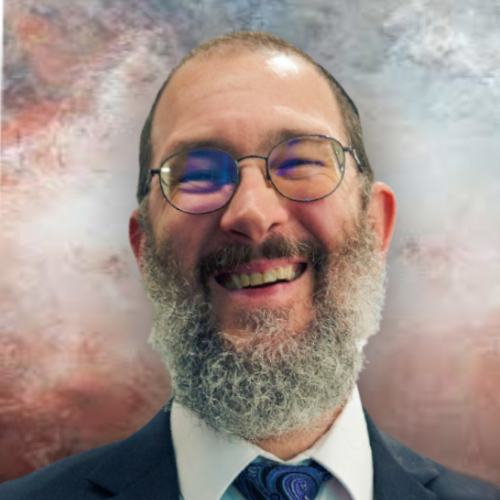
Rabbi Yonason Goldson graduated from the University of California at Davis with a degree in English, which he put to good use by setting off hitchhiking cross-country and backpacking across Europe. He eventually arrived in Israel where he connected with his Jewish roots and spent the next nine years studying Torah, completing his rabbinic training as part of Ohr Somayach's first ordination program. After teaching yeshiva high school for 23 years in Budapest, Hungary, Atlanta, Georgia, and St. Louis, Missouri, Rabbi Goldson established himself as a professional speaker and advisor, working with business leaders to create a company culture built on ethics and trust. He has published seven books and given two TEDx Talks, is an award-winning host of two podcasts, and writes a weekly column for Fast Company Magazine. He also serves as scholar-in-residence for congregations around the country.
Previously:
• Good Intentions Never Prevail Over Cold Reality
• Sarcastic Wit Carries Too High a Cost
• Character, not as a bank account. Rather, an investment portfolio
• Are We Programming Ourselves Out of Existence?
• The bigger they come, the harder we try to make them fall
• How to Transform Fallacies Into Actionable Reality
• How to make life worth living --- no, REALLY!
• What Do Opposites Attract? Truth and Wisdom
• Groucho Marx and Embracing Tension
• Toward a more civil civilization
• Break Down Barriers of Thought to Build Towers of Innovation
• 'Tis the Season for Reflecting Beyond your Reflection
• Why Antisemitism Is Not Just a Jewish Problem
• The rank stupidity of 'Just let it go'
• To create a functioning, biblically-based civilization
• The difference between optimism and hope
• The Next Piece of the Puzzle Might Fill the Hole in Your Heart
• Self-Esteem Isn't Given -- It's Earned
• Remember the Past to Promote a Successful Future
• Are We Making Failure the Price of Success?
• Demoralization Is More About Culture than Feelings
• The Lesson We're Missing From the Death of Charlie Kirk
• Invest in Your Own Success by Building Up Others
• The Most Valiant Heroes Fight on a Different Battlefield
• How Pundits Came to Give Punditry a Bad Name
• The Wisdom of Knowing What You Don't Know
• Success Thrives in the Light of Purpose and Passion
• When Seeking Peace, Don't Release the Dogs of War
• Greta Thunberg Sails Toward Moral Hypocrisy
• Checking More Boxes Is Not the Solution
• Why Sometimes NOT Seeing Is MORE Believing
• A Healthy Diet for the Brain Promotes Ethical Clarity for the Mind
(COMMENT, BELOW)