




 Contact The Editor
 Articles By This Author
"You chose the way of the hero. And they found you amusing for a while, the people of this city. But the one thing they love more than a hero is to see a hero fail, fall, die trying. In spite of everything you've done for them, eventually they will hate you."
If you don't recognize this quote, do yourself a favor and go back to watch Sam Raimi's "Spiderman" starring Tobey Maguire. It's a masterpiece of both filmmaking and social commentary, hidden within the childlike trappings of a Marvel Comic superhero movie.
The sad truth is that many of us indulge the corrosive reflex of seeking flaws and defects to knock heroes off their pedestals. We can always find them if we dig deep enough. Former President Teddy Roosevelt advocated racial hierarchies and eugenics. Harry Truman was supported by the notorious political boss Tom Pendergast. Former President Abraham Lincoln spent his life struggling with depression. The bigger they come, the harder we try to make them fall.
You may have heard the popular story about the professor who handed out a sheet of paper blank except for a single black dot. When asked to write about what they saw, every student described the dot. The professor then asked why they focused on the tiny speck of black rather than the wide expanse of white.
What is it about human nature that fixates our attention on ripples of imperfection so that we ignore or negate an ocean of virtues and accomplishments?
It may have something to do with this week's addition to the Ethical Lexicon:
Gorgonize (gor*gon*ize/ gawr-guh-nahyz) verb
To affect as a Gorgon; to hypnotize or petrify.
The Gorgons of Greek mythology were three sisters of such hideous appearance that whoever looked upon them turned instantly to stone. The hero Perseus successfully beheaded one of the three, Medusa, by approaching backward and using the polished surface of his shield as a mirror.
Now consider: How should we respond when presented with heroic character and virtue in others? Ideally, by finding inspiration to set the bar higher for ourselves. More often, however, we let feelings of inadequacy drive us searching for reasons to debase them. The latter choice grants us license to validate our own mediocrity.
Which entirely misses the point. It is precisely because heroes achieve greatness despite their own flaws that we should honor and emulate them. But when we look for the worst in the worthy (or even the semi-worthy), when we focus on the splinter of ugliness that resides in an otherwise beautiful soul, we turn our own hearts to stone and thereby avoid all sense of obligation to refine our own character.
To make matters worse, we extend the same pattern of behavior beyond heroes, seeking reasons to malign anyone outside our own tribe or clique. For all the talk about diversity and inclusion, we witness a propensity toward vilification of all who look, talk or think differently from our projected norm. By focusing on the negative, we deprive ourselves of the opportunity to learn from our differences. Beyond that, we miss out on valuable alliances and partnerships that could enable us to succeed as part of a team in ways we never could alone.
One of the seminal teachings of the Jewish sages is to judge every person on the side of merit. Ostensibly, this calls on us to give others the benefit of the doubt. But the unique elasticity of ancient Hebrew provides an additional interpretation: Judge the whole person on the side of merit.
We are all better than our worst moments, and every person has qualities worthy of admiration. Who among us doesn't have some innate temperament or personal history responsible for their strengths on the one hand and their deficiencies on the other? Contemplate how all of us carry the baggage of genetics and environment and you will more easily recognize others' potential to contribute positively to your life.
Rather than indulging the gorgonizing inclination of human negativity, we serve our own interests best by following the ethical imperative to give the benefit of the doubt, presume positive intent and honor our own humanity by granting others the same grace we hope they will grant us.
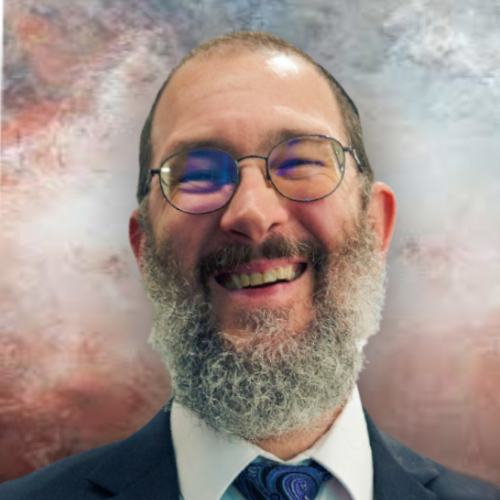
Rabbi Yonason Goldson graduated from the University of California at Davis with a degree in English, which he put to good use by setting off hitchhiking cross-country and backpacking across Europe. He eventually arrived in Israel where he connected with his Jewish roots and spent the next nine years studying Torah, completing his rabbinic training as part of Ohr Somayach's first ordination program. After teaching yeshiva high school for 23 years in Budapest, Hungary, Atlanta, Georgia, and St. Louis, Missouri, Rabbi Goldson established himself as a professional speaker and advisor, working with business leaders to create a company culture built on ethics and trust. He has published seven books and given two TEDx Talks, is an award-winning host of two podcasts, and writes a weekly column for Fast Company Magazine. He also serves as scholar-in-residence for congregations around the country.
Previously:
• How to Transform Fallacies Into Actionable Reality
• How to make life worth living --- no, REALLY!
• What Do Opposites Attract? Truth and Wisdom
• Groucho Marx and Embracing Tension
• Toward a more civil civilization
• Break Down Barriers of Thought to Build Towers of Innovation
• 'Tis the Season for Reflecting Beyond your Reflection
• Why Antisemitism Is Not Just a Jewish Problem
• The rank stupidity of 'Just let it go'
• To create a functioning, biblically-based civilization
• The difference between optimism and hope
• The Next Piece of the Puzzle Might Fill the Hole in Your Heart
• Self-Esteem Isn't Given -- It's Earned
• Remember the Past to Promote a Successful Future
• Are We Making Failure the Price of Success?
• Demoralization Is More About Culture than Feelings
• The Lesson We're Missing From the Death of Charlie Kirk
• Invest in Your Own Success by Building Up Others
• The Most Valiant Heroes Fight on a Different Battlefield
• How Pundits Came to Give Punditry a Bad Name
• The Wisdom of Knowing What You Don't Know
• Success Thrives in the Light of Purpose and Passion
• When Seeking Peace, Don't Release the Dogs of War
• Greta Thunberg Sails Toward Moral Hypocrisy
• Checking More Boxes Is Not the Solution
• Why Sometimes NOT Seeing Is MORE Believing
• A Healthy Diet for the Brain Promotes Ethical Clarity for the Mind
(COMMENT, BELOW)