




 Contact The Editor
 Articles By This Author
"Do you have any heroes?"
I'm guessing that Peter Singer would answer with a hard "no," considering his recent criticism of Pope Leo XIV for invoking the term "human exceptionalism" to differentiate between human beings and artificial intelligence. Entrenched in the dubious moral philosophy of utilitarianism, the former Princeton University Professor of Bioethics acknowledges only one metric for determining value: cost-benefit analysis.
Consequently, the unborn, infants and the profoundly disabled fail to qualify for personhood. Why not? Because they provide no measurable contribution to the world. Conversely, gorillas, orangutans and chimpanzees do. So will artificial intelligence (AI), once it demonstrates "consciousness," however that might be determined or defined.
For any human being, this kind of moral confusion is dangerous; for a self-designated ethicist, it is reprehensible. Which evokes this week's entry into the Ethical Lexicon:
Exceptionalism (ex*cep*tion*al*ism/ ik-SEP-shuh-nl-iz-uhm) noun
The belief that a person or group is unique, extraordinary and inherently superior to others.
Does exceptionalism smack of elitism? Not in the least. Former President Barack Obama embraced this very fallacy when he remarked on April 9, 2009: "I believe in American exceptionalism, just as I suspect that the Brits believe in British exceptionalism and the Greeks believe in Greek exceptionalism."
Maybe Mr. Obama didn't watch enough movies with his kids. He might have taken a lesson from the penetrating line from archvillain Syndrome in "The Incredibles," who declares that "when everyone is super, then no one will be."
Any serious student of history recognizes what makes America exceptional. Thomas Jefferson ringingly captured the Framers' vision of self-evident truths that "all men were created equal [and] endowed by their Creator with certain inalienable rights" that extend throughout (but not beyond) the human race.
Nobility is not an accident of birth reserved for some; it is the transcendent potential possessed by all. Certainly, other societies and cultures have made exceptional contributions to human society. But it was the United States, by rejecting the divine right of kings, that brought the aspirational precept of spiritual egalitarianism into the modern political arena.
Needless to say, few of us manifest the noble character of a Lincoln, Churchill or Mandela. But that divine spark reveals itself in every one of us, if only we allow it to do so.
In December 1943, Franz Stigler, a Luftwaffe flying ace, intercepted a heavily damaged B-17 piloted by American 2nd Lieutenant Charlie Brown. Instead of shooting down the defenseless aircraft, Stigler pulled his Messerschmitt alongside the crippled bomber, escorted it away from German anti-aircraft fire, then guided it toward the North Sea and back to allied territory. Stigler even saluted the American pilot before turning back home.
Would any AI override its programming to reason its way to a similar act of mercy? Even if it did, computers do not think; they simply manage data and weigh outcomes, just as their organic counterparts — animals — merely prioritize based on instinct.
What animals and machines have in common is that they react to stimuli and circumstances. But they do not respond. And because they have no response mechanism, they have no responsibility; decisions that resemble free choice are merely part of their programming. Only human beings can choose to override our self-serving impulses and act in pursuit of a higher purpose.
This is the essence of human exceptionalism. And it is precisely the point Peter Singer has continued to miss over the entire course of his career.
In truth, Thomas Jefferson may have missed it himself. Human beings can claim inalienable rights precisely because we alone possess responsibilities. Animals fight, steal and even murder with moral impunity. They cannot be wicked since they have no virtue — a quality often detached altogether from intellect.
Indeed, for all the intellectual sophistication of ancient Greece, Plato and Aristotle endorsed infanticide and the utilitarian eugenics that ultimately found expression in the policies and practices of Nazi Germany. This is the company that Ethicist Singer chooses for himself.
By recognizing the intrinsic value of humankind, we simultaneously recognize our responsibility to protect the vulnerable, to show mercy to the weak and to condemn immorality regardless of profits or returns. We arrive at ethical clarity only when we stop seeing ourselves as biological machines and celebrate the supernal uniqueness of our humanity.
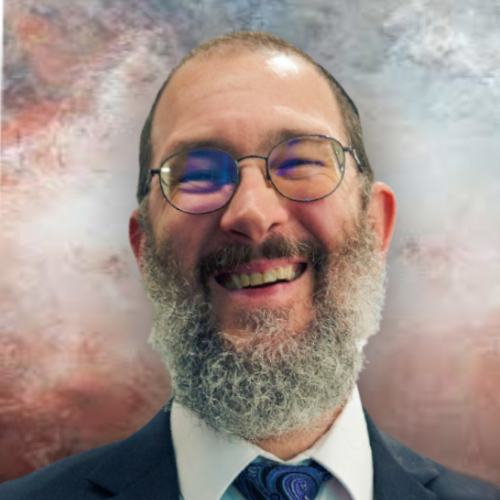
Rabbi Yonason Goldson graduated from the University of California at Davis with a degree in English, which he put to good use by setting off hitchhiking cross-country and backpacking across Europe. He eventually arrived in Israel where he connected with his Jewish roots and spent the next nine years studying Torah, completing his rabbinic training as part of Ohr Somayach's first ordination program. After teaching yeshiva high school for 23 years in Budapest, Hungary, Atlanta, Georgia, and St. Louis, Missouri, Rabbi Goldson established himself as a professional speaker and advisor, working with business leaders to create a company culture built on ethics and trust. He has published seven books and given two TEDx Talks, is an award-winning host of two podcasts, and writes a weekly column for Fast Company Magazine. He also serves as scholar-in-residence for congregations around the country.
Previously:
• If You Get Where You're Going, You've Taken the Wrong Road
• Think Twice Before You Take Advice
• Taking intellectual humility seriously
• What are we?
• Are we Pillaging our own Moral Depository?
• Why Sharp Tongues Lose the War of Words
• Good Intentions Never Prevail Over Cold Reality
• Sarcastic Wit Carries Too High a Cost
• Character, not as a bank account. Rather, an investment portfolio
• Are We Programming Ourselves Out of Existence?
• The bigger they come, the harder we try to make them fall
• How to Transform Fallacies Into Actionable Reality
• How to make life worth living --- no, REALLY!
• What Do Opposites Attract? Truth and Wisdom
• Groucho Marx and Embracing Tension
• Toward a more civil civilization
• Break Down Barriers of Thought to Build Towers of Innovation
• 'Tis the Season for Reflecting Beyond your Reflection
• Why Antisemitism Is Not Just a Jewish Problem
• The rank stupidity of 'Just let it go'
• To create a functioning, biblically-based civilization
• The difference between optimism and hope
• The Next Piece of the Puzzle Might Fill the Hole in Your Heart
• Self-Esteem Isn't Given -- It's Earned
• Remember the Past to Promote a Successful Future
• Are We Making Failure the Price of Success?
• Demoralization Is More About Culture than Feelings
• The Lesson We're Missing From the Death of Charlie Kirk
• Invest in Your Own Success by Building Up Others
• The Most Valiant Heroes Fight on a Different Battlefield
• How Pundits Came to Give Punditry a Bad Name
• The Wisdom of Knowing What You Don't Know
• Success Thrives in the Light of Purpose and Passion
• When Seeking Peace, Don't Release the Dogs of War
• Greta Thunberg Sails Toward Moral Hypocrisy
• Checking More Boxes Is Not the Solution
• Why Sometimes NOT Seeing Is MORE Believing
• A Healthy Diet for the Brain Promotes Ethical Clarity for the Mind
(COMMENT, BELOW)