




 Contact The Editor
 Articles By This Author
Legend has it that Apelles of Kos, court painter of Alexander the Great, displayed his paintings in the public square to elicit comments from passersby. On one occasion, a shoemaker observed an inaccuracy in the design of the subject's sandals. Apelles promptly revised the painting.
Upon seeing that the artist had heeded his advice, the shoemaker began offering additional suggestions. Apelles responded pithily: "Critique only the sandals."
Twenty-three centuries ago, nothing more was needed to silence an uncredentialed quibbler. Today, it's considerably harder to stifle self-designated pundits and cognoscenti. In our post-truth era, when feelings routinely overrule facts and logic, authentic seekers of knowledge and wisdom, be warned of the danger posed by this week's addition to the Ethical Lexicon:
Ultracrepidarian (ul*tra*crep*i*dar*i*an /uhl-truh-krep-i-DAIR-ee-uhn) adjective Describing a person who criticizes, judges or gives advice outside the area of his or her expertise.
There's no mystery how we got here. The internet is an extraordinary tool, but to find a needle of insight often requires sifting through haystacks of mis- and disinformation. Wikipedia is a wonderful resource, but only fools accept what they read there without diligently verifying the sources (attribution: former President Abraham Lincoln).
Why are we so willing to accept unsubstantiated reports and stories? Maybe it's confirmation bias, since we eagerly welcome any factoids that confirm our preconceptions. Maybe it's the sense of power we get from claiming truth is on our side. Maybe it's simple avoidance of the effort required to unearth reliable information.
Ultracrepidarianism rears its head more brazenly by the hour. What's your opinion about climate change? About vaccines? About the nuclear threat from Iran?
For most of us, the answers should be simple: I don't know. I'm not a climate scientist. I'm not an epidemiologist. I have no credentials in international politics. But when the whole world seems filled with self-appointed experts, am I any less qualified to pontificate on every subject under the sun?
Returning from sabbatical in Brazil after World War II, theoretical physicist Richard Feynman found the whole scientific community embroiled in a debate over the decay of subatomic particles. Unable to follow the arguments on either side, the future Nobel Prize winner dug up the article that sparked the imbroglio and found it deeply flawed. Apparently, none of the scientists on either side had bothered to read the original paper.
Similar stories abound in the world of business, even though it hardly requires an MBA to recognize how bad information will sabotage strategy, tarnish brand image, destroy reputations, waste resources, increase costs and lead to missed opportunities.
And yet, astonishingly, willful ignorance pervades corner offices at the highest levels. CEOs of Bausch & Lomb, Radio Shack and Yahoo! are just a few examples of candidates hired to prominent positions despite falsifying their resumes. In many cases, the scandals following exposure cost the companies dearly. In politics as well, George Santos won election to the House of Representatives after concocting outrageous fictions about his record and his history.
How did these prevarications go unexposed? Because little effort was made to uncover them. If we don't take responsibility to authenticate stories before accepting them, we have only ourselves to blame when they prove unsubstantiated.
The revered Rabbi Noach Weinberg famously observed that nothing is more irrelevant than the answer to a question that was never asked. Ethics demands that we verify information before disseminating or consuming it. Abdicating that responsibility by relying on unqualified "experts" will prove considerably more inconvenient for us than it does for them.
The true menace posed by ultracrepidarians is not that they don't know what they say they know. It's not even that they don't care whether their own opinions hold water. It's that we don't care.
Readers of a certain age will remember Clint Eastwood's classic line as Inspector Harry Callahan: "A man has got to know his limitations." When we acquire the intellectual humility to know the limits of our own expertise and the intellectual courage to question the expertise of others, then we can proceed with confidence to make choices we can depend on to lead us where we want to go.
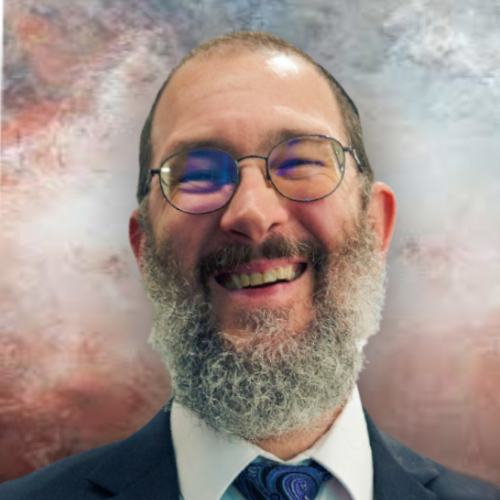
Rabbi Yonason Goldson graduated from the University of California at Davis with a degree in English, which he put to good use by setting off hitchhiking cross-country and backpacking across Europe. He eventually arrived in Israel where he connected with his Jewish roots and spent the next nine years studying Torah, completing his rabbinic training as part of Ohr Somayach's first ordination program. After teaching yeshiva high school for 23 years in Budapest, Hungary, Atlanta, Georgia, and St. Louis, Missouri, Rabbi Goldson established himself as a professional speaker and advisor, working with business leaders to create a company culture built on ethics and trust. He has published seven books and given two TEDx Talks, is an award-winning host of two podcasts, and writes a weekly column for Fast Company Magazine. He also serves as scholar-in-residence for congregations around the country.
Previously:
• Taking intellectual humility seriously
• What are we?
• Are we Pillaging our own Moral Depository?
• Why Sharp Tongues Lose the War of Words
• Good Intentions Never Prevail Over Cold Reality
• Sarcastic Wit Carries Too High a Cost
• Character, not as a bank account. Rather, an investment portfolio
• Are We Programming Ourselves Out of Existence?
• The bigger they come, the harder we try to make them fall
• How to Transform Fallacies Into Actionable Reality
• How to make life worth living --- no, REALLY!
• What Do Opposites Attract? Truth and Wisdom
• Groucho Marx and Embracing Tension
• Toward a more civil civilization
• Break Down Barriers of Thought to Build Towers of Innovation
• 'Tis the Season for Reflecting Beyond your Reflection
• Why Antisemitism Is Not Just a Jewish Problem
• The rank stupidity of 'Just let it go'
• To create a functioning, biblically-based civilization
• The difference between optimism and hope
• The Next Piece of the Puzzle Might Fill the Hole in Your Heart
• Self-Esteem Isn't Given -- It's Earned
• Remember the Past to Promote a Successful Future
• Are We Making Failure the Price of Success?
• Demoralization Is More About Culture than Feelings
• The Lesson We're Missing From the Death of Charlie Kirk
• Invest in Your Own Success by Building Up Others
• The Most Valiant Heroes Fight on a Different Battlefield
• How Pundits Came to Give Punditry a Bad Name
• The Wisdom of Knowing What You Don't Know
• Success Thrives in the Light of Purpose and Passion
• When Seeking Peace, Don't Release the Dogs of War
• Greta Thunberg Sails Toward Moral Hypocrisy
• Checking More Boxes Is Not the Solution
• Why Sometimes NOT Seeing Is MORE Believing
• A Healthy Diet for the Brain Promotes Ethical Clarity for the Mind
(COMMENT, BELOW)