




 Contact The Editor
 Articles By This Author
The Pentagon's abrupt withdrawal of a dozen long-range B-1 bombers from a British airbase raises a host of troubling questions. Vice President J.D. Vance said the move was made "out of an abundance of caution" after
This naturally brings to mind Operation Spiderweb, the innovative Ukrainian strikes in
The Iranians, like every other military power, are paying attention to what's going on in the world's other major theater of war.
How should the Pentagon prepare for this emerging threat against its global network of bases — even at locations once assumed to be safe havens such as Fairford in the
The
I grappled with the imperatives of force protection constantly while I was the supreme allied commander of the
The Pentagon's installations abroad are generally not regarded as
A second priority is sharing intelligence with the host nation. Information provided by the
Again, history has a deadly lesson:
A third priority is the physical security around, over and even under each base. Ordinarily, the host nation has the lead on external security arrangements. But we should encourage joint efforts to strengthen perimeter barriers and other defenses. The Pentagon needs to undertake a top-to-bottom review of all its bases for protection against unmanned technologies: aerial drones in particular, but also surface, tunneling and maritime platforms. This should start with bases in countries closest to
Any review of
Another step could be based on the Phoenix Ravens, highly trained
While improving security at each installation is an urgent need, sometimes you can get safer by getting smaller. The Pentagon should conduct a review of its entire basing network with an eye toward cutting back where it may be redundant or especially vulnerable. In the
A worldwide web of bases has deep military value — it allows us to monitor threats, forward-position personnel and equipment, and forge links with local militaries in scores of countries. But it also creates a huge set of targets for our enemies. Pulling the B-1s out of Fairford was probably the right move —
(COMMENT, BELOW)
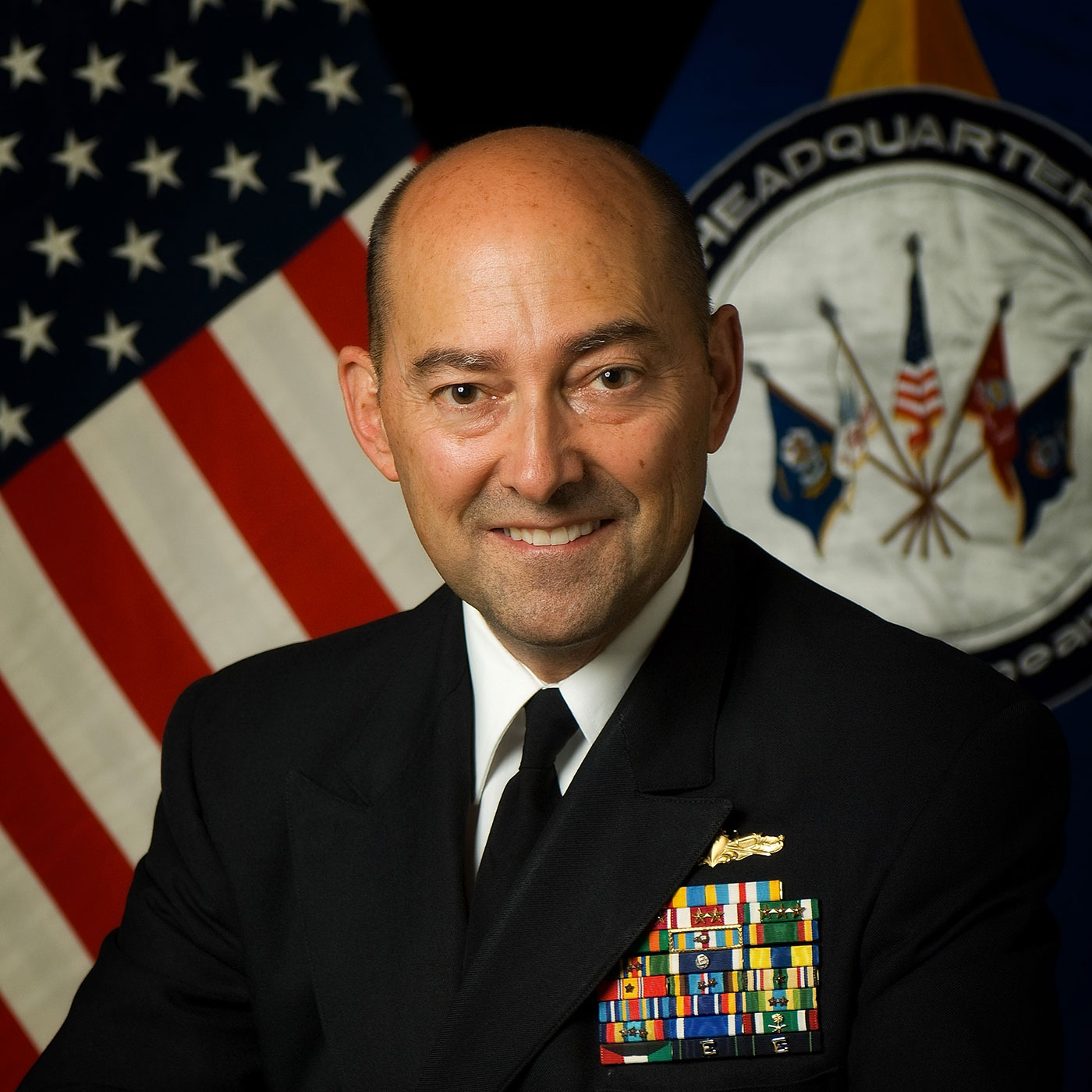
Stavridis is a Bloomberg columnist. He is a retired U.S. Navy admiral and former supreme allied commander of NATO, and dean emeritus of the Fletcher School of Law and Diplomacy at Tufts University. He is also an operating executive consultant at the Carlyle Group and chairs the board of counselors at McLarty Associates.
Previously:
• Putin's shadow war is testing NATO's restraint
• Putin can't break down NATO's door. He's trying the window
• How Canada can gear up for the Arctic great game
• 06/16/26 Saudi Arabia Can Break the Houthis' Grip on the Red Sea
• 02/10/26 If the US leaves NATO, Europe can protect itself
• 01/27/26 While Washington debates Greenland, Iran is bleeding
• 10/16/25 Putin is taking his hybrid warfare to the sea
• 03/18/25 Ukraine needs US weapons but it needs intelligence more
• 02/14/25 Trump's 'Iron Dome' must succeed where Reagan's 'Star Wars' failed
• 09/13/24 Ignore Hamas' trendsetting warfare and risk the West
• 06/26/24 Here's how to stop the Houthi attacks at sea
• 05/15/24 Putin's next target may be the 'NATO lake'
• 04/09/24 Latest ISIS attacks show the war on jihad is heating up
• 02/21/24 Ukraine's military reset is doomed without more US aid
• 12/21/23 US-led Naval force might not end Houthi ship attacks
• 11/22/23 Send America's floating hospitals to Gaza
• 11/08/23 What the US should do about Iran
• 08/30/23 Haiti needs a new UN mission, this time led by the US
• 08/16/23 To stop Iran's threat to Gulf ships, send the Marines
• 07/28/23 NATO convoys can protect Ukraine's grain harvest from Putin
• 07/28/23 Sweden and Finland give NATO an Arctic opportunity
• 07/11/23 US military's recruiting woes are a national-security crisis
• 06/02/23 Ukraine war may become a proving ground for AI
• 05/16/23 Iran's tanker seizures may bring U.S. convoys back to the Gulf
• 05/08/23 Sudan rescue mission is helping the US Navy prepare for war
• 05/01/23 Ukraine is running out of ammo. So is the US
• 03/10/23 The US military must create a Cyber Force
• 12/07/23 Putin will carpet-bomb Ukraine unless the West acts
• 10/14/22 Putin's campaign of terror from the air is already failing
• 09/08/22 Iran reveals how its naval warfare is changing
• 08/02/22 US needs a global alliance against Russia's cyberattacks
• 06/28/22What to expect from NATO's new strategic concept
• 04/13/22 Nukes? Ukraine war's most potent weapon may be a cell phone
• 01/18/22 Russia is pushing Finland and Sweden toward NATO
• 10/20/21 What Colin Powell taught me about war and optimism
• 09/14/21 Why the U.S. Navy is hunting pirates off Africa
• 07/29/21 Cuba and how Biden can avoid another Mariel boatlift
• 07/01/21 Donald Rumsfeld never gave in
• 02/16/21 Keeping troops in Afghanistan makes America safer
• 08/19/20 Military reasons to celebrate the Israel-UAE deal
• 07/02/20 Taliban bounties would be a new low even for Putin
• 01/02/20 May the 'Space Force' be with you
• 08/02/19 What Iran will do next, and how to stop it
• 05/06/19 The 'Five Eyes' intelligence-sharing alliance should expand, starting with Israel and Japan
• 04/24/19 Sri Lanka attacks mark the birth of terrorism 3.0
• 01/14/19 Iran's tiny navy is trying to revive the Persian Empire
• 06/04/18 US was right to give China's navy the boot
• 06/04/18 Big winner of Colombia's election is the US
• 05/17/18 Great power politics is back as U.S. aims at Russia with resurrected Navy fleet
• 03/20/18 Fake advice for Putin's fake win