




 Contact The Editor
 Articles By This Author
As a former supreme allied commander of the North Atlantic Treaty Organization, I never contemplated the idea of the US leaving the world's most vital security alliance. But the crisis over Greenland's sovereignty of the last two weeks has me thinking seriously about what NATO would look like without its most important member.
NATO was formed from the ashes of World War II by a dozen nations, 10 European and two North American. Lord Ismay, the first secretary general, famously said that NATO existed to "keep the Russians out, the Americans in, and the Germans down." He saw the Cold War unfolding, the threat to Western Europe posed by the Soviet Union, and the danger of an unchecked Germany. He also knew the US might repeat the mistake it made after World War I: Simply walking away from the continent after the fighting was over.
From 1949 to the present, the alliance has largely held to Ismay's objectives: through the Cold War, the collapse of communism and reunification of Germany, the endless disputes about burden-sharing, and the post-9/11 NATO mission to Afghanistan, which I commanded for four years. Despite a lot of internal quarreling, the alliance has grown to 32 nations and remains vital for security not only in Western Europe but in the Balkans, the Middle East, the Arctic and the waters off Europe and Africa.
But the Greenland controversy is as tense as any previous rift in the alliance. Nearly 10 European nations sent small troop contingents to the island over the past two weeks, ostensibly to survey defenses against Russian and Chinese intrusion, but mostly to forestall US military intervention threatened by President Donald Trump. Cooler heads have prevailed so far, but the matter is hardly closed, and there are plenty of other issues where Team Trump appears poised to threaten transatlantic unity.
It is worth asking: What does NATO look like without the US?
Washington has by far the largest military budget in the alliance, clocking in around $900 billion, with Trump recently floating the idea of increasing it to $1.5 trillion. But Europe's collective defense budget is quite large — the second in the world — at around $400 billion. For perspective, Russia checks in at around $140 billion and China about $250 billion. And with new pledges by European nations to get to 5% of GDP (3.5% of pure military spending and 1.5% on related infrastructure and cyber capability), there is a lot of money being used on defense across the Atlantic.
Another big loss for the alliance with a US departure would be the reduction in the defense industrial base and all its associated technological capability. Lockheed Martin, Northrop Grumman, Boeing, General Dynamics and RTX (formerly Raytheon) are huge prime contractors, and roughly half of the world's top 25 defense firms are in the US. But Europe has a reasonably strong industrial base, with eight of the top 25 contractors, including BAE (UK), Leonardo (Italy), Airbus (France/Germany), Thales (France), Saab (Sweden) and Rheinmetall (Germany).
The US produces the highest levels of technology, including the lion's share of stealth fifth-generation fighter planes such as the F-35; the best long-dwell drones for reconnaissance and strike; the top air-defense systems, including Patriot and THAAD; and better satellites, the key to overall intelligence. Yet Europe makes warships and diesel submarines more rapidly and with equal capabilities to many US classes. And thanks to their recent support to Ukraine, the Europeans are rapidly overtaking the US in production of tanks, howitzers and ammunition.
Europe would be able to quickly come up to speed in lower-tech systems like short-dwell drones; small arms; helicopters and transport aircraft; and shorter-range air defenses and surface-strike missiles. How fast could continental firms replicate departing US military tech? Probably five years of development, but not forever out of reach. As for troop strength, while the US is able to rely on an all-volunteer force, many European members of the alliance are comfortable with some form of conscription. Nine nations have it already, including both Nordic members, and Germany is about to reinstitute it.
There is of course the major problem of a nuclear shield. Although the UK and France have small (but well-trained) nuclear strike forces, Europe would no longer have the strategic umbrella supplied by Washington. So, the European states might be forced to build up their own capabilities, with Germany and Poland likely joining the nuclear club. Or they could possibly negotiate a framework with the US to maintain a shared nuclear force for some period.
A huge factor on Europe's side is that a NATO without the US would not have the kind of global responsibilities — driven by American priorities - that led the alliance into wars in Afghanistan and Iraq. NATO could be far more focused on its neighborhood, particularly with protecting Ukraine — which is more likely to eventually join a post-US NATO. The alliance would still have six nations in the Arctic.
If the US moves toward a narrow focus on the Western Hemisphere - as both the new National Security Strategy and the National Defense Strategy say it should - I suspect the remaining 31 nations of NATO will ultimately be just fine. And adding Ukraine — with 40 million people, a highly experienced army and a deeply motivated populace — would bring the alliance back to 32.
Let's hope the US stays the course, but I suspect the Europeans are starting to think about other options for their defense. People ask me all the time, "Who will win the war in Ukraine — the Russians or the Ukrainians?" The real winner could be the Europeans — if they band together and build a stronger pan-continental defense. Let's hope this would be inside NATO, and alongside the US. But if necessary, I think they could go it alone.
(COMMENT, BELOW)
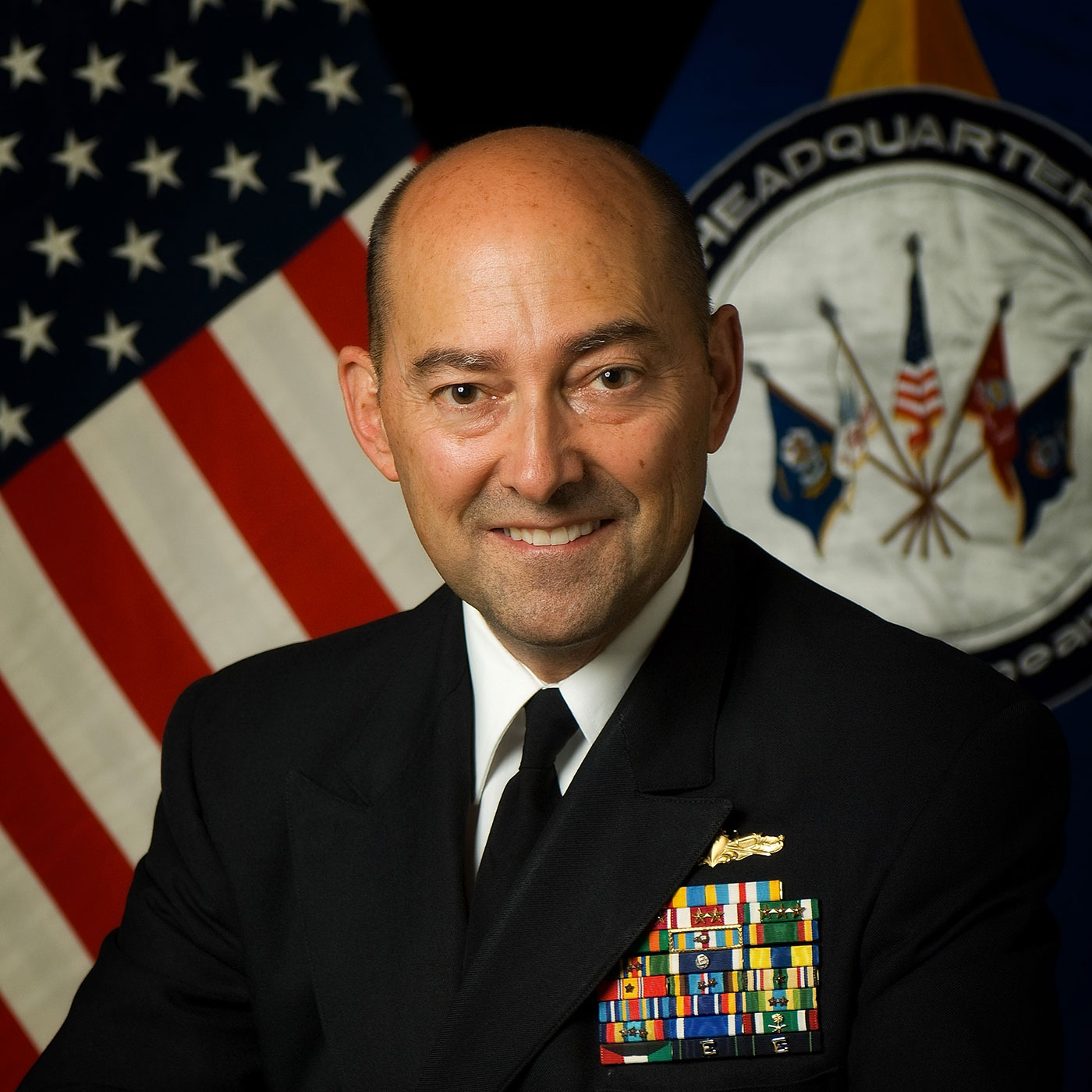
Stavridis is a Bloomberg columnist. He is a retired U.S. Navy admiral and former supreme allied commander of NATO, and dean emeritus of the Fletcher School of Law and Diplomacy at Tufts University. He is also an operating executive consultant at the Carlyle Group and chairs the board of counselors at McLarty Associates.
Previously:
• 01/27/26 While Washington debates Greenland, Iran is bleeding
• 10/16/25 Putin is taking his hybrid warfare to the sea
• 03/18/25 Ukraine needs US weapons but it needs intelligence more
• 02/14/25 Trump's 'Iron Dome' must succeed where Reagan's 'Star Wars' failed
• 09/13/24 Ignore Hamas' trendsetting warfare and risk the West
• 06/26/24 Here's how to stop the Houthi attacks at sea
• 05/15/24 Putin's next target may be the 'NATO lake'
• 04/09/24 Latest ISIS attacks show the war on jihad is heating up
• 02/21/24 Ukraine's military reset is doomed without more US aid
• 12/21/23 US-led Naval force might not end Houthi ship attacks
• 11/22/23 Send America's floating hospitals to Gaza
• 11/08/23 What the US should do about Iran
• 08/30/23 Haiti needs a new UN mission, this time led by the US
• 08/16/23 To stop Iran's threat to Gulf ships, send the Marines
• 07/28/23 NATO convoys can protect Ukraine's grain harvest from Putin
• 07/28/23 Sweden and Finland give NATO an Arctic opportunity
• 07/11/23 US military's recruiting woes are a national-security crisis
• 06/02/23 Ukraine war may become a proving ground for AI
• 05/16/23 Iran's tanker seizures may bring U.S. convoys back to the Gulf
• 05/08/23 Sudan rescue mission is helping the US Navy prepare for war
• 05/01/23 Ukraine is running out of ammo. So is the US
• 03/10/23 The US military must create a Cyber Force
• 12/07/23 Putin will carpet-bomb Ukraine unless the West acts
• 10/14/22 Putin's campaign of terror from the air is already failing
• 09/08/22 Iran reveals how its naval warfare is changing
• 08/02/22 US needs a global alliance against Russia's cyberattacks
• 06/28/22What to expect from NATO's new strategic concept
• 04/13/22 Nukes? Ukraine war's most potent weapon may be a cell phone
• 01/18/22 Russia is pushing Finland and Sweden toward NATO
• 10/20/21 What Colin Powell taught me about war and optimism
• 09/14/21 Why the U.S. Navy is hunting pirates off Africa
• 07/29/21 Cuba and how Biden can avoid another Mariel boatlift
• 07/01/21 Donald Rumsfeld never gave in
• 02/16/21 Keeping troops in Afghanistan makes America safer
• 08/19/20 Military reasons to celebrate the Israel-UAE deal
• 07/02/20 Taliban bounties would be a new low even for Putin
• 01/02/20 May the 'Space Force' be with you
• 08/02/19 What Iran will do next, and how to stop it
• 05/06/19 The 'Five Eyes' intelligence-sharing alliance should expand, starting with Israel and Japan
• 04/24/19 Sri Lanka attacks mark the birth of terrorism 3.0
• 01/14/19 Iran's tiny navy is trying to revive the Persian Empire
• 06/04/18 US was right to give China's navy the boot
• 06/04/18 Big winner of Colombia's election is the US
• 05/17/18 Great power politics is back as U.S. aims at Russia with resurrected Navy fleet
• 03/20/18 Fake advice for Putin's fake win