SIGN UP FOR THE DAILY JWR UPDATE. IT'S FREE. Just click here.
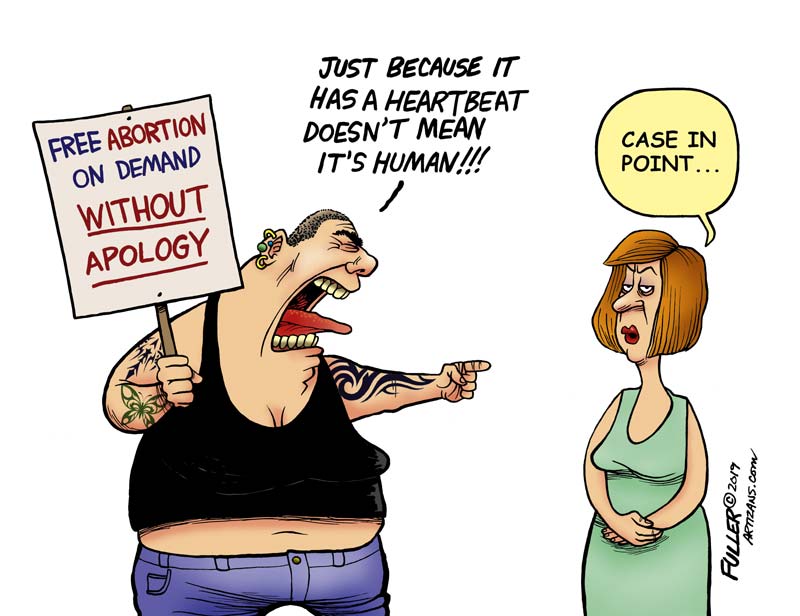
Abortion has fallen off the GOP agenda. In its place is a campaign against transgender issues, largely centered on children's sports. Politically, I understand it. Ethically, I don't.
Consider Texas. Democratic Senate candidate James Talarico is unabashedly pro-choice and supports restoring Roe v. Wade, this time as a federal law. But there's been nary a mention of abortion in Republican Ken Paxton's campaign flyers nor in the anti-Talarico ads bombarding Texas households. The GOP ads are almost singularly focused on Talarico's stance on trans issues and "boys playing in girls' sports." (Talarico has recently somewhat moderated his stance for "safety" and "fairness.")
Republicans in close races in Ohio and Iowa are making a similar play. The Republican midterm convention in Dallas last month also featured the new drumbeat on trans issues, while there was not a single session devoted to abortion. The only time I even heard it mentioned was in a pastor's invocation.
As someone who grew up in the Republican Party in the 1980s and 1990s, the silence on abortion is deafening. But the switch makes sense if you look at polls. Most churchgoing Republicans I knew a decade or so ago were single-issue voters with respect to abortion. Now they represent a shrinking interest group.
It's time to move on now, GOP strategists insist. Since the 2022 Dobbs Supreme Court case that overturned Roe v. Wade, more Americans identify as "pro-choice" (53%) than "pro-life" (42%), according to Gallup. This is perhaps because of the extremes unleashed by anti-abortion groups after Dobbs, be it vigilante justice codified in Texas law or efforts to claw back contraception. Of the pro-life voters who remain, they are largely congregated within the Republican Party (although 38% of independents also identify as "pro-life," as well as 15% of Democrats).
By contrast, the vast majority (73%) of Americans are uncomfortable with transgender athletes competing on a sports team that doesn't match their sex at birth. This holds across gender, ethnicity and age, according to a 2025 Pew Research poll. Even most Democrats (55%) are uncomfortable with it. Heck, even most LGBTQ voters have at least some reservations. Most people (66%) favor a law requiring trans athletes to compete on teams that match their sex at birth, rising to 88% of Republicans. You don't get that type of agreement on anything anymore.
Make trans athletes the focus, and Republicans can claim the mantra of "common sense." Maybe it can even crowd out the noise about gas prices, tariffs and ICE raids. Maybe it taps into the deeply felt, COVID-cemented parental fears of schools, doctors and therapists having more say over your own children than you do. It turns what seems to be a relatively isolated phenomenon into a threat against every traditional household and its children.
This is the advice the GOP seemingly is running on. And not just during these midterms. The Republican Party has been distancing itself from pro-life causes for some time now, taking abortion out of its policy platform in 2024. Earlier this year, President Donald Trump even flirted with getting rid of the Hyde Amendment, a 50-year-old rule barring federal funds from being used for abortion.
But while the party has moved on, the abortion landscape in America has gotten worse, not better. Following the Dobbs decision, the abortion rate has risen after decades of previous decline. In liberal states, abortion remains available without gestational limits, far outside public opinion for what's acceptable. Maternal mortality rates are still too high, and in states with abortion bans, infant mortality rates have risen, according to recent research from the Johns Hopkins Bloomberg School of Public Health.
In Republican-led states with abortion restrictions, much more could be done to support healthy moms and babies. While some conservative states increased their Medicaid coverage for new mothers following the rollback of abortion access, these states are the most likely to lack paid parental leave or robust child-care support or additional tax credits for families. There's an uncomfortable irony here. If preserving life in the womb matters, so too do the conditions on the outside of the womb, especially for vulnerable mothers and children. Otherwise, it feels like abortion restrictions are more about control than support.
At the national level, the GOP could advocate for a first trimester limit (where there is significant public agreement), reworking the child tax credit to frontload support early in life, and making birth in America safer for mothers and children. Republicans could also argue for a federal paid parental leave program, which would have many benefits, among them fewer neonatal fatalities.
Republicans are using trans issues to portray themselves as protectors of children. But that requires a focus beyond who plays on the soccer team. It requires a deeper and more holistic set of policies to improve family flourishing — one that invests in maternal well-being, infant survival and economic opportunity.
The sad thing is that Republicans used to recognize (some of) this. Now they've moved on.
(COMMENT, BELOW)
Abby McCloskey is a columnist, podcast host, and consultant. She directed domestic policy on two presidential campaigns and was director of economic policy at the American Enterprise Institute.
Previously:
• AI is changing motherhood for the worse
• Finally, a Mamdani Policy Even Republicans Can Love
• MAHA's strange pivot to its least-popular ideas
• Promising to drive down the cost of living by spending money we don't have
• Social media age bans aren't perfect. So what? The back-to-school blues are here --- for parents
• Social media age bans aren't perfect. So what?
• America's religious pluralism has never been tested like this
• No-cost birth is a bipartisan idea. Is it a good one?
• Does Trump really not care about the midterms?
• Can RFK Jr. save Republicans' midterms hopes?
• I love data, but K-12 standardized tests have lost the plot
• Universal child care isn't always good for kids
• Staggering US deficits call for a debt-to-GDP limit
• Texas needs a boring Senate race. In fact, we all do
• The Heritage Foundation sees the family crisis --- but not the fix
• The Right may rue expanding presidential powers
• Republicans have ideas on affordability --- Just not conservative ones
• Republicans Make Life a 'States' Issue' at Their Peril
• The GOP's identity crisis is deepening by the day
• What's worse than cherry-picked government data?
• A case for childlike wonder in a grown-up world
• Why giving matters, even for federal accounts
• Meta is failing kids. Lawmakers are failing them, too
• More affordable holidays are a presidential pen-swipe away?
• The gender wars are heating up --- on the right
• Too many kids can't read. Blame a lack of spelling tests
• Dems, curb your enthusiasm
• Vouchers aren't enough to fix US schools




 Contact The Editor
 Articles By This Author