



 Contact The Editor
 Articles By This Author
We have never known more about one another, and perhaps we have never known less.
We know where people went on vacation, what they ate for dinner, whose children got engaged, who had a baby, who bought a house, who got promoted, and who seems to be living the life we wish we had. We scroll through pictures and statuses and stories and somehow come away believing that we know what is happening in other people’s lives.
But we don’t.
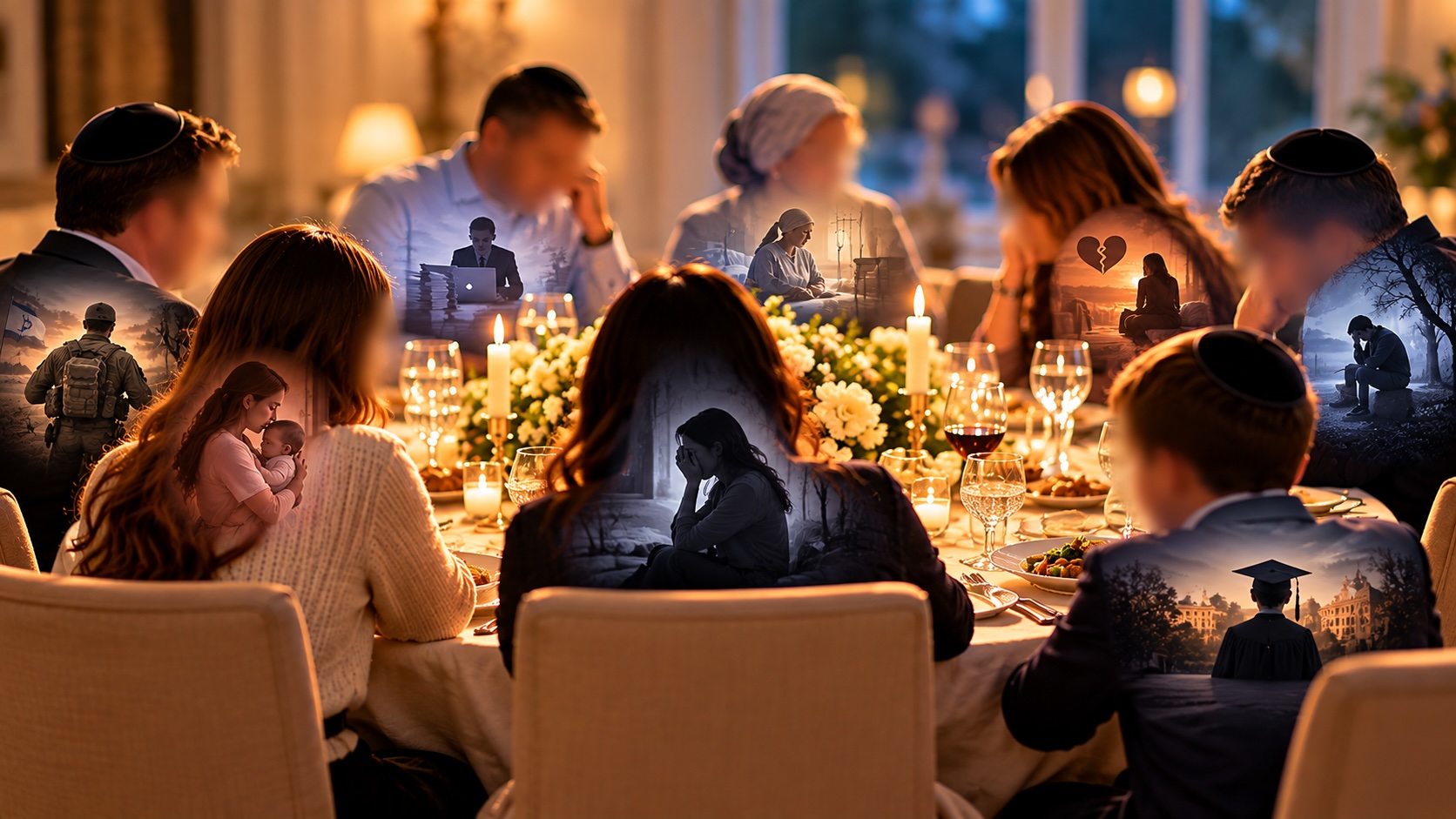
We see the picture, but we don’t see what happened five minutes before it was taken or five minutes after. We see the family sitting around the table, but we don’t know what someone at that table is desperately davening for. We see the smile, but not necessarily the struggle behind it. We see what people choose to share, but we have no idea what they are carrying privately. That has always been true, but in our hyperconnected world it is easier than ever to forget.
Years ago, I wrote about the particular pain experienced by those struggling with infertility and the responsibility the rest of us have to measure our words more carefully.
What if you knew that the person you were talking to desperately wanted to have a child, or would give anything to have another child, but was struggling to make it happen? Wouldn’t you navigate the conversation more thoughtfully? Wouldn’t you think twice before asking a question or making a comment that might seem completely innocent to you but could be enormously painful to them?
And it isn’t only those waiting for children. There are those waiting to meet the person with whom they hope to bring children into this world. They sit at our tables and attend our shuls and simchas. They celebrate engagements and dance at weddings. They smile when yet another friend announces good news. They answer the questions about whether they are dating anyone and endure the well-intentioned suggestions of people who are certain they know exactly whom they should meet. We see them smiling and participating, but we often have no idea how much they long to find their person, to build a home, to have a family, and to move into the next chapter of life.
There are so many other invisible struggles as well. Someone at the table may be watching a marriage unravel. Someone may be terribly worried about a child. Someone may be carrying financial pressure that keeps them awake at night. Someone may be grieving a loss that everyone else seems to have moved past. Someone may be waiting for test results or frightened by a diagnosis they have told almost nobody about. Someone may be struggling emotionally while projecting strength and confidence to everyone around them. We simply don’t know.
The recently celebrated holy day Simchas Torah brings this lesson into particularly sharp focus. We dance with children and grandchildren on our shoulders, often with our spouse lovingly looking on. Kol Ha’Nearim is one of the highlights of the year. We gather our children together under a giant tallis payer shawl, shower them with brachos, and look on with enormous pride and gratitude. It is a beautiful moment, and it should be. Parents and grandparents should kvell. Children should feel the love of their families and their community and experience the sweetness of being embraced by the Torah.
But years ago, someone who was desperate for a child told me how much she dreaded Simchas Torah. In the days leading up to holy day, she felt anxiety rather than anticipation. For those yearning to become parents, watching parents and grandparents beam as their children gather under the tallis can be a painful reminder of what they don’t yet have. And for the single man or woman waiting and wondering when they will meet the person with whom they can build a home and hopefully bring children under that tallis one day, that moment can hurt too.
Does that mean we should celebrate less? Of course not. It means we should feel more.
Jewish life asks us to develop a heart large enough to hold two emotions at the same time. I can be profoundly grateful for my blessing while remaining deeply sensitive to your longing. I can celebrate my children and grandchildren without assuming everyone around me has been given the same gifts. My spiritual joy does not require blindness to your pain. In fact, genuine gratitude should make me more sensitive, not less.
That sensitivity begins with the words we use. Questions like, “How many children do you have?” “How long have you been married?” “No children yet?” “When are you going to have another?” or to a single person, “So, are you seeing anyone?” may feel like harmless conversation. They may come from genuine interest and concern. But we don’t know what is happening behind the answer.
We also need to resist the instinct to solve other people’s struggles. “Just relax.” “It will happen.” “You’re still young.” “I know the perfect person for you.” “Have you tried this doctor?” “Why don’t you adopt?” “Go to this Rabbi." “ “ G od has a plan.” Even when these words come from love, they can land very differently than we intend. If someone chooses to share something deeply personal, that is an act of trust and vulnerability. Often they don't need our solution. They need our friendship. They need an ear. They need to know that we see them, that we are thinking about them, that we are davening for them, and that they don't have to explain or defend the pain they are experiencing.
We should also be careful about complaining casually about the very blessings someone else is desperately waiting for. Parenting is hard. Marriage is hard. Life is hard, and friends should be able to speak honestly with one another. But context matters. The sleepless night that feels exhausting to one person may sound like a dream to someone who would give anything to be awakened by a crying baby. The complaint about a spouse may land painfully on the person who goes home alone and wonders if that will ever change.
Social media practically trains us to do it: We see the vacation, the family portrait, the engagement picture, the birth announcement, the smiling faces around a holiday table, and we fill in everything we cannot see.
But a picture is not a life. A status is not a story. A smile is not proof that everything is okay. Celebrate your children and grandchildren. We should never diminish our joy because someone else is hurting. But we can expand our hearts enough to hold two things at once.
Perhaps that is one of the great challenges and privileges of being part of a community. To really see one another. Not just the pictures we post, the clothes we wear, the families we present, or the smiles we display, but to remember that every person has a story we don't fully know.
Before you ask the question, make the comment, offer the advice, or tell the joke, look around the room. You don’t know who is at the table. And sometimes the greatest kindness we can offer another person is simply to remember that.
Rabbi Efrem Goldberg is the spiritual leader of the Boca Raton Synagogue.
Previously:
• The Greatest Pleasure You're Not Pursuing
• The Most Important Question Nobody Asks
• The Pope, the President, and the Jewish View of AI
• What Do People Feel When They Walk Into Your Home?
• Mattering in a world of 8.3 billion
• Spiritual Lessons of a Surveillance World
• The Secrets to Your Success: Biblical Parenting Revealed
• What They'll Never Understand About the Jews
• From Non —Jewish Nanny to Now —Jewish Nanny: A Lesson For Each of Us
• The Man with the Golden Arm Who Saved MILLIONS of Lives
• Don't just 'pursue' happiness!
• Discover joy and satisfaction in your life WITHOUT gurus and their hippy dippy followers
• Don't Withdraw, Draw Closer
• What Our Shuls and Communities can Learn from Disney
• Do You Have 8 Minutes?
• There Is No Other Hand
• Be an Influencer by Being Yourself
• Simchas Torah, One Year Later: A Day of Death, an Opportunity for Rebirth
• It Doesn't Do Anything for Me
• Turn your RAGE into OUTRAGE!
• They 'bageled', I blew it
• It's none of your business...or is it?
• Reframe your life
• Should you care what others think about us?
• Bud Light, Hobby Lobby, Angel Bakery and you: Representing the 'brand'
• Bitter Herbs, Grateful People
• America is in a state of moral decline — — — what are you doing about it?
• @#$%&! Profanity
• The most effective way to have influence
• Are you an 'earth angel'?
• On influencers' influence
• This rabbi walked into an AA meeting — — — and walked out with a deeper relationship with the Divine
• Here is How To Leave Your MARK on the World
• A Spiritual FitBit
• Moses and Muhammad . . . Ali?
