



Head & Heart
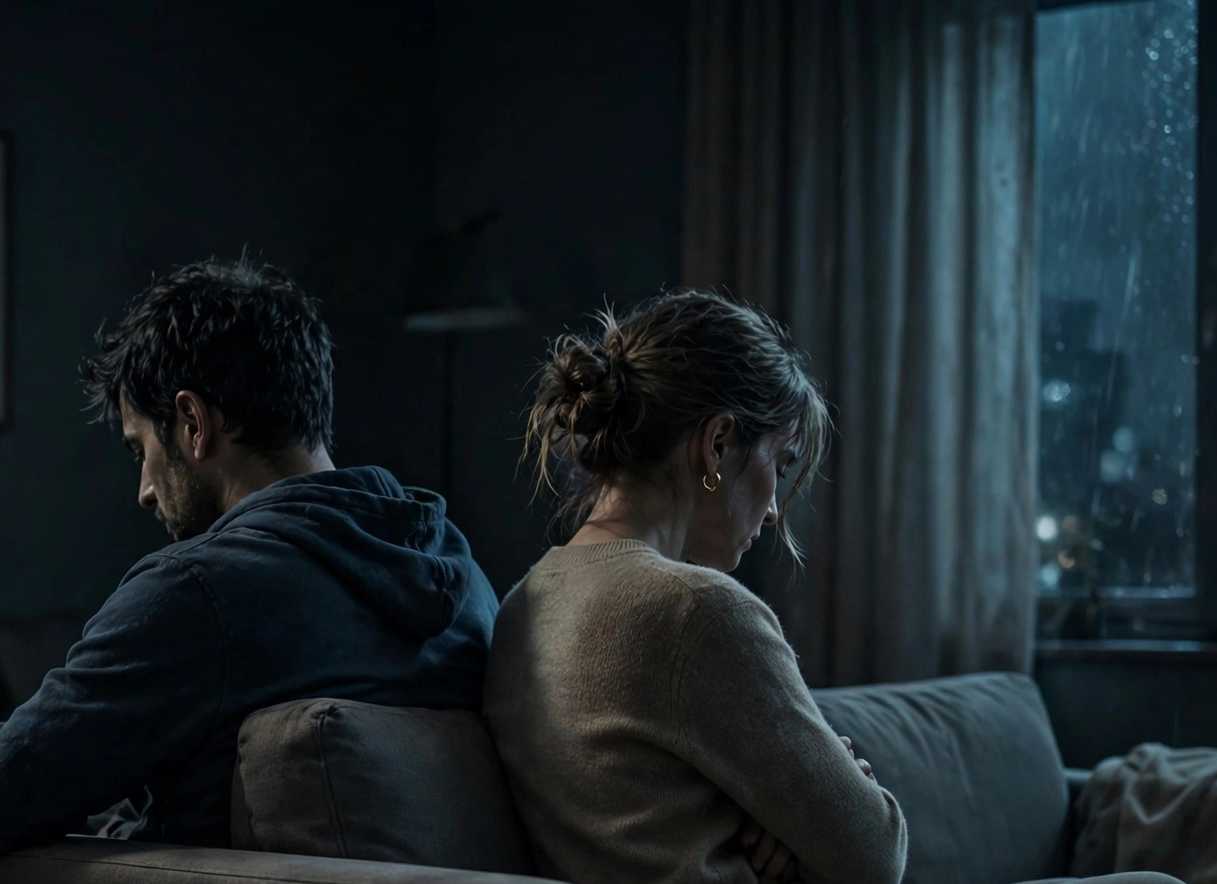
The silent treatment can harm relationships. Here's what to do instead

By Maggie Penman The Washington Post
Published Nov. 6, 2026
 Contact The Editor
 Articles By This Author
When Jeannie Vanasco's mother stopped talking to her, it was all she could think about.
Vanasco, a successful writer, said her mother lived with her at the time, and the silences made her feel powerless. Sometimes they lasted for days or weeks or even longer.
"I would get mad at her and give her the silent treatment," said her mother, Barbara Vanasco, 84, adding that when her husband was alive, the couple did the same thing. They used to not talk to each other after a fight to avoid saying something they'd regret.
Jeannie Vanasco, 42, would think through possible wrongs she had committed. Was she not involving her mother, a widow, in her life enough?
The uncertainty felt maddening. Ultimately she wrote a memoir about the experience. Barbara Vanasco didn't read it.
"I don't want to read about myself," she said. "I know my faults."
Why do people use the silent treatment?
Harry Reis, a professor of psychology at the University of Rochester, said the silent treatment is "not really silent."
"There's no sound to it, but the message is unmistakable. And that message is that I'm angry with you."
The silent treatment is intentionally ignoring someone close to you after a conflict or perceived slight in an effort to send that person a message. Another psychologist described it as a "noisy silence."
It's surprisingly common.
In a survey of Americans in 1997, Kipling Williams, a distinguished professor emeritus of psychology at Purdue University who studies social ostracism, found that more than two-thirds of Americans said they had given the silent treatment to a loved one.
Whenever Williams gives talks, he asks the audience if they've ever had someone treat them like this.
"Almost 100 percent say that they've gotten the silent treatment," Williams said. "About 95 percent grudgingly admit to using it on others."
He said the reasons vary. Sometimes it's a deliberate punishment or a power play.
One woman Williams interviewed told him that her husband won every argument. He was an attorney and was verbally adept. She started giving him the silent treatment and found that he would apologize, even if he didn't know what he was apologizing for.
But even if the silent treatment temporarily produced her desired effect, it can weaken the relationship, Williams said.
"What we have noticed in interviews with people who use it chronically is that most of them come to regret it," Williams said. "It has caused dissolutions of relationships."
Research suggests that the silent treatment can create distance and decreases satisfaction in romantic relationships for both partners: The person who is giving the silent treatment stays angry and feels frustrated that their partner isn't reading their mind. The person receiving the silence finds it frustrating too.
Levi Baker, a psychology professor at the University of North Carolina at Greensboro, studies conflict in relationships, and a few years ago he started researching why people use this technique.
He and his colleagues found that most people prefer direct communication so they don't have to guess what the other person is feeling.
"People hate being the recipients of this," Baker said.
The silent treatment also didn't seem to be effective in changing whatever behavior was bothering the person in the first place.
In a series of studies, Baker and his colleagues looked at when people use the silent treatment in romantic relationships, and they found that the person giving the silent treatment often felt an uncertainty about their partner's commitment.
"People do this to kind of test their partner," Baker said.
Experts said in some cases it can also be used as a form of punishment or even abuse.
Why is it painful?
The silent treatment or social ostracism can activate the same brain regions as physical pain according to brain imaging research conducted by Williams and others.
"We experience it as painful," Williams said. "We feel bad about ourselves. We feel disconnected. We feel a loss of control."
It becomes clear that someone is mad at you, but it's not clear why, so you can't address it.
"Silence has incredible power," said Julie Schwartz Gottman, clinical psychologist and co-founder of the Gottman Institute, where she and her husband have done decades of research on relationships. "It's devastating."
Psychologists who have studied social ostracism find that being ignored threatens fundamental needs we have as humans to feel a sense of belonging, acceptance and self-esteem.
"The silent treatment cuts off our belonging to a social unit. It's slicing that sense of, ‘I'm one of us,'" said Ximena Arriaga, a professor of psychology at Purdue University.
Often the person who is giving the silent treatment doesn't benefit either.
In studies where Williams and other researchers have induced people to give the silent treatment, they may temporarily feel powerful or superior. But researchers also found that it made people feel guilty and that in the long-term there's a cost in the quality of the relationship.
How to skip the silence
Gottman said that during conflict, our bodies often go into fight or flight mode, and it can be helpful to take some down time before continuing the conversation.
"Most people don't take a break in the right way," Gottman said.
If one partner is overwhelmed and they "stonewall" the other, or shut down and stop communicating, it can exacerbate the conflict.
Gottman said a better way to handle this is to take a break, and tell your partner when you will be back to continue the conversation.
"That is paramount," Gottman said. "Otherwise the other person is going to feel rejected, abandoned and anxious because they have no idea if you're ever going to get back to the conversation again."
She recommends that people take anywhere from 20 minutes to 24 hours and try to not think about the conflict. She suggests going for a run, doing yoga, listening to music or doing something soothing before returning to the conversation.
If a partner or family member is the one giving you the silent treatment, Gottman suggests writing them a letter.
"So you write down, ‘Okay, you have not acknowledged my presence,'" Gottman said. "‘Here's what I'm feeling. I'm feeling abandoned. I'm feeling frustrated. I'm feeling totally alone. I'm feeling alienated. And the distance I'm feeling from you is growing by the hour.'"
Then, tell the person that if you did something to wrong them that you'd like to apologize and make sure you don't do it again.
"So, in a way, you're extending an olive branch, but at the same time, you are conveying, ‘Hey, this makes me feel horrible, and it's making the relationship worse rather than better,'" Gottman said.
For Vanasco and her mother, time and a few adjustments restored the balance of their relationship and opened their lines of communication.
Barbara Vanasco said she was trying to be protective.
"I didn't want to hurt her feelings. I mean, I did in the long run by giving her the silent treatment," she said. "But I didn't want to say something I would regret. … I've always had a temper."
Jeannie Vanasco said their relationship is now stronger in part because they have a bit more space: Her mom used to live with her but now lives across the street.
"No one can drive me as absolutely bonkers as my mom can. And it's because I love her so much. And I do know she loves me," Jeannie Vanasco said.
(COMMENT, BELOW)
Every weekday JewishWorldReview.com publishes what many in the media and Washington consider "must-reading". Sign up for the daily JWR update. It's free. Just click here.