



Courts & Law
Supreme Court to scrutinize ICE's mandatory detention policy for immigrantsnationwide

By Julian Mark The Washington Post
Published Oct. 2, 2026
 Contact The Editor
 Articles By This Author
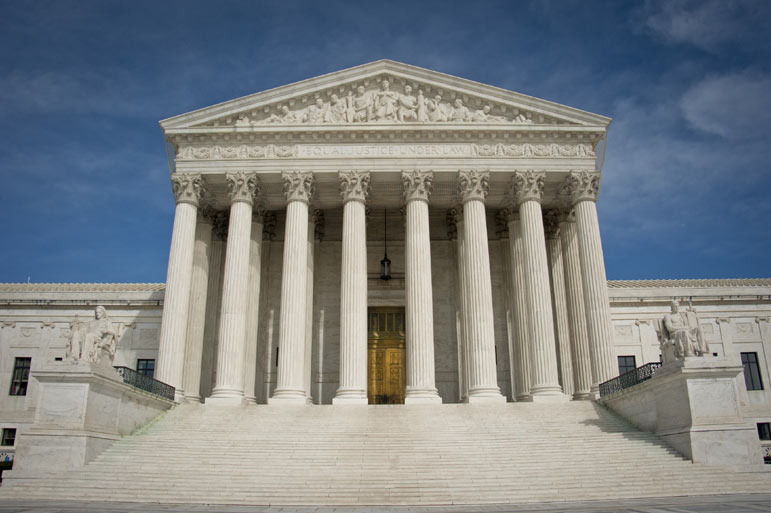
The Supreme Court on Thursday said it would review the legality of the Trump administration's novel policy of denying bond hearings to immigrants swept up in its immigration crackdown.
The case is one of the first the high court has accepted since its summer recess ended, and it promises to be among the most consequential of the term that officially begins next week.
Without the opportunity to request a bond hearing, some immigrants arrested by Immigration and Customs Enforcement have spent months in detention facilities while awaiting their removal proceedings.
In the past, immigrants who had been residing inside the United States during their arrest were allowed to request a bond hearing before an immigration judge to contest their detentions by arguing that they are not a public danger or a flight risk. That changed after President Donald Trump took office last year.
Under Trump, ICE officials implemented a policy of detaining immigrants throughout their removal proceedings without the opportunity to post bond and wait out the proceedings outside of a detention facility.
That policy means that tens of thousands of immigrants arrested during Trump's sweeping crackdown have remained in mandatory detention.
Numerous migrants have fought their detention and have won relief from lower courts. At the same time, a Washington Post examination of such cases found that ICE had violated several dozen court orders directing that the detainees be granted a bond hearing or be set free.
Nine of the nation's federal appeals courts have ruled that the administration's mandatory detention policy is unlawful, saying it violates the immigrants' legal due process rights. Just two appeals courts - the Fifth Circuit based in Louisiana, considered the most conservative in the country, and the Eight Circuit based in Missouri - have sided with the Trump administration.
"The reason it's never been litigated before is because it's never been done before," said Rebecca Cassler, an attorney with the American Immigration Council who last month argued a case before the full Fifth Circuit appeals court on behalf of three immigrants seeking the right to a bond hearing.
"The government's interpretation of the law is really novel," Cassler said. "The policy is that all of these people never get a chance to have bond hearings, even people who present no risk of flight or danger, which are the classic considerations of whether to detain people. They're just stuck."
Under the Trump administration's policy, which reversed decades of precedent, undocumented immigrants who have lived in the country for years are to be kept in detention until their deportation cases are resolved, which could take weeks or months. Trump administration officials say they are closing "loopholes" that allowed previous administrations to let these immigrants remain free.
The policy is rooted in the administration's belief that federal immigration law does not draw a distinction between migrants who are arrested while crossing the border and those who entered the U.S. without authorization but have lived here for years.
For decades, immigration judges viewed these groups as having distinct legal rights: Those arrested at the border are "seeking admission to the country" and can be held in detention, while those who have been in the country for more than two years without committing other crimes have established community ties and are generally eligible for an immigration bond.
The Supreme Court will examine whether a patchwork of statutory provisions in immigration law authorizes the mandatory detention policy.
The high court ruled on several other consequential immigration cases this past summer, including a decision blocking Trump's effort to limit the constitutional promise of birthright citizenship for most children born on U.S. soil. That issue may return to the Supreme Court after Trump renewed his effort to limit birthright citizenship through an executive order signed after the ruling.
The justices, in ideologically split decisions, have allowed Trump to move forward with other immigration policies, such as the cancellation of temporary humanitarian protections for Haitian and Syrian immigrants.
The court has also said immigration officials can block migrants from crossing the U.S. border to claim asylum.
(COMMENT, BELOW)
Every weekday JewishWorldReview.com publishes what many in the media and Washington consider "must-reading". Sign up for the daily JWR update. It's free. Just click here.