



 Contact The Editor
 Articles By This Author
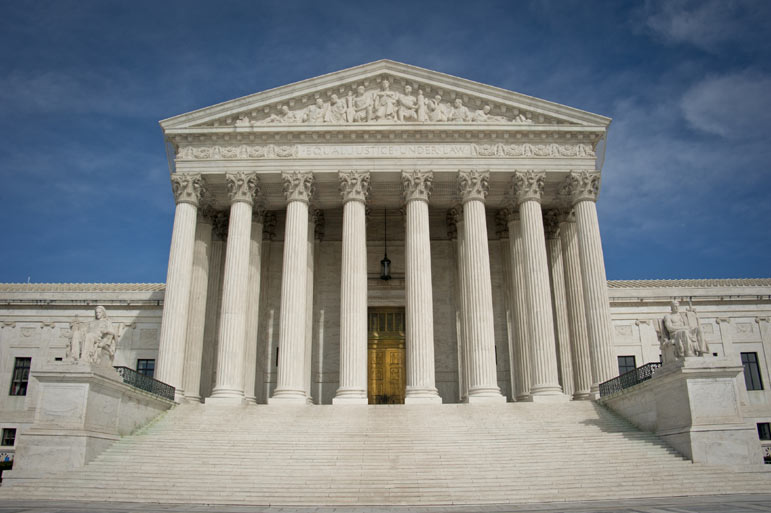
The Supreme Court is in the final weeks of a term that has been full of decisions about how much power President Donald Trump has.
In many cases, the court, which leans heavily conservative after Trump's first term, ruled in favor of his attempts to dramatically expand presidential power, at least temporarily.
But the court did strike down his sweeping tariffs plan and ordered the government to pay companies back billions.
Now, as The Washington Post's Justin Jouvenal reports, the court could rule in the next week or so on major cases about Trump's power - potentially against the president.
Here's more about those cases.
• Can Trump effectively decide which babies born in the United States get citizenship?
This is a concept known as birthright citizenship, which most mainstream legal scholars say is set in stone because it's in the Constitution.
The 14th Amendment of the Constitution says anyone born on U.S. soil has American citizenship. Trump signed an executive order that declared children born to undocumented immigrants aren't subject to this right. "The privilege of United States citizenship is a priceless and profound gift," it said.
Some conservative scholars have argued that citizenship shouldn't apply to children of undocumented immigrants because their parents aren't fully under the jurisdiction of the U.S. government and therefore shouldn't get to be citizens.
But following that logic would also mean that undocumented immigrants can't be punished for committing crime in the U.S. because they are subject only to their home country's laws, Saikrishna Prakash, a constitutional law professor at the University of Virginia, said in an interview when the Supreme Court was hearing arguments on this case.
Courts across the country pretty quickly temporarily paused Trump's changes from taking effect. One judge called the order "blatantly unconstitutional." Justin reports that many legal experts believe that the justices have signaled they will block Trump from trying to change the Constitution on this.
Legal experts emphasize that being born in the United States is one of the basic legal foundations for U.S. citizenship. If you take that away for some, you throw into question the citizenship of everyone.
"Why am I a citizen? Or you?" said Andrew Rudalevige, who studies the modern American presidency at Bowdoin College and has written a book on the limits of presidential power. "We are citizens because of the 14th Amendment, because of the fact we were born here."
• Can Trump remove a leader of the Federal Reserve?
The Federal Reserve is the nation's central bank, a hugely influential agency that oversees interest rates. It's designed to operate independently from political influence because what's good for a politician (Trump really wants interest rates lowered ahead of the midterm elections) might not be good for the economy (which is experiencing the highest inflation in years, and making borrowing money cheaper could exacerbate that).
Trump has tried to put a lot of pressure on the Fed anyway. His Justice Department launched, then dropped, a criminal investigation into its then-chairman. Trump is also trying to fire another board member, Lisa Cook, claiming he has the power to do so because he alleges she committed mortgage fraud. Cook denies wrongdoing, sued, and the Supreme Court has seemed very skeptical Trump can fire a member of the hugely influential Federal Reserve. Presidents nominate leaders to the Federal Reserve, the Senate confirms them, but no president has tried to fire a member. (The law says Fed governors can only be fired for cause.)
In arguments early this year, conservative Justice Brett M. Kavanaugh said the Trump administration's position that it could remove Fed governors without judicial review or due process "would weaken if not shatter the independence of the Federal Reserve."
• Can Trump fire other heads of independent agencies?
Conservatives on the court have seemed open to letting Trump fire heads of other independent agencies, which oversee policies that include consumer protections for products such as baby gear, copyright infringement issues, environmental regulations and labor issues.
Trump has fired many Democratic leaders in these agencies without cause despite a law in Congress protecting their independence. The center of this debate is his firing of a Democrat from the Federal Trade Commission, which aims to protect consumers from scams.
The firings immediately drew parallels to another president who aggressively tried to expand the office's powers: In the 1930s, Franklin D. Roosevelt was the last president to try to fire a member of the nation's trade commission. The Supreme Court stopped him in a case known as Humphrey's Executor.
Nearly a century later, legal experts said that the Supreme Court seems inclined to reverse itself.
"Having a president come in and fire all the doctors and scientists and replace them with loyalists is not in the interest of the American people," liberal Justice Ketanji Brown Jackson said in arguments in December.
But Justice Brett M. Kavanaugh and other conservative justices appeared to suggest it was time for a change to those rules: "They're not elected, as Congress and the president are," he said of agency heads, echoing the administration's argument, "and are exercising massive power over individual liberty and billion-dollar industries."
Critics worry that this would create a politically motivated government where big business would have even more influence over regulations that affect Americans' everyday lives.
(COMMENT, BELOW)
Previously:
• The most interesting candidates of 2026
• The many hang-ups to a peace deal with Iran