



 Contact The Editor
 Articles By This Author
Count me as bearish on Democrats' chances of winning the Senate majority.
Yes, Minority Leader Chuck Schumer sounds increasingly bullish. Yes, President Donald Trump remains the gift that keeps on giving, issuing plenty of let-them-eat-cake fodder. (His most recent: "I love the inflation. You know what I really love? I love the inflation," said Trump, and no other political figure in the history of the world.)
But keep in mind that Democrats need a net gain of four seats, which means a combination of defending seats in bluish/purplish states and flipping seats in red ones. That will require stellar candidates with state-tailored messages that can rally fed-up but fractured Democrats, bring along fickle independents, pick up some never-Trump Republicans, and persuade enough MAGA voters to stay home.
Given the Democratic Party's candidates, that's going to require a perfect political storm.
Democrats are looking at a slate of six seats to get to that four-seat gain. The six, in order of most likely to flip, are North Carolina, Ohio, Maine, Alaska, Iowa and Texas.
Democrats also have to defend seats in Georgia and in Michigan. A win by the very talented, on-message Senator Jon Ossoff is an easy bet to make in Georgia. But in Michigan, which holds its primary on Aug. 4, Democrats are divided between a Schumer-backed centrist, a Bernie Sanders-backed progressive, and a third candidate whose biggest appeal is being neither. That general election will be tough, no matter who emerges; Republicans have fielded a strong candidate in former Representative Mike Rogers. He lost by only a whisker in 2020.
But for the sake of argument, let's give the Democrats the advantage in these two races - it's been over a decade since Michigan elected a Republican to statewide office and Georgia seems poised to offer a weak GOP opponent against Ossoff.
Now, the difficult path to four.
Give Democrats North Carolina. Former Governor Roy Cooper is a familiar name to Tar Heel voters and is facing a weak opponent in Michael Whatley, a former Republican National Committee chair and former North Carolina Republican Party chair. (Note to party leaders: Just because you know these types of party people doesn't mean that voters do.)
In Ohio, former senator Sherrod Brown seems in a similarly strong position, with high name ID and a not-so-great opponent in Senator Jon Husted, who was appointed to the seat and comes across as a man who never takes off his suit. Brown led Husted 53% to 45% in a late May poll.
In Maine, Democrat Graham Platner has emerged as a deeply flawed candidate who will likely take on more water as summer turns to fall. What had been strengths - his anger, his brawn and that wrestler-sounding voice - now seem problematic, given more recent revelations about his treatment of women. The rookie Platner will have to walk a fine line between channeling populist anger and sounding like an unhinged Reddit troll with a covered-up Nazi tattoo and anger-management problem. Especially when running against unflappable Senator Susan Collins, in a state where victory depends on doing well among older voters, primarily women. It's hard to see Platner pulling out a victory.
In Texas, Democratic nominee James Talarico is facing a barrage of criticism over his claims about G od and gender. He has been called a vegan, which amounts to slander in Texas. Republicans have AI-generated pictures of him dressed as a woman. Stupid? Yep. Effective? Yep. All of this is shorthand for "Talarico is not really a Texan, and his Bible isn't our Bible." Talarico, who ran against Representative Jasmine Crockett in the primary and is a seminary student, will need socially conservative Democrats, particularly Black and Latino voters, to show up for him in strong numbers. That will be difficult, as Talarico seems like a man from nowhere, condescending and out of step on issues of faith.
Nevertheless, Senate Democrats are starting to sound cautiously optimistic. Senator Tim Kaine told Politico that Democrats started the year with a 20% chance of winning and it's "45% now, with the arc going in the right direction."
The reality for the Democratic Party is that much of that movement has been provided by Trump's distracted style of leadership. He promises an end to the Iran conflict while juggling design projects in DC and claiming he doesn't "think about Americans' financial situation."
Democrats are right to seize on such quotes in their focus on affordability. That's an issue magnified by high gas and energy prices that are the result of Trump's bad decisions and won't likely fall in the near term. That will drive voters.
But so will the question of who voters want to have power. And that's where any blue wave might hit the red-state reality that many voters have backed Republicans for years, in good and bad economies. That sort of attachment to a side will be difficult for Democrats to overcome in states like Iowa and Alaska - and even with a president who keeps digging a deeper hole for the GOP.
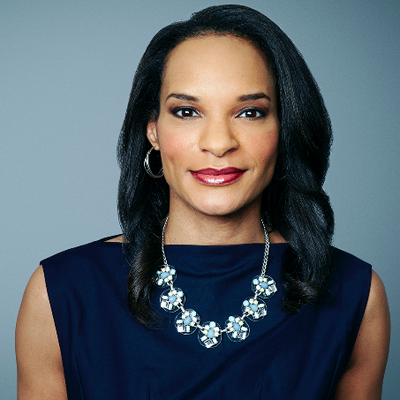
Nia-Malika Henderson is a politics and policy columnist for Bloomberg Opinion. A former senior political reporter for CNN and the Washington Post, she has covered politics and campaigns for almost two decades.
(COMMENT, BELOW)