




 Contact The Editor
 Articles By This Author
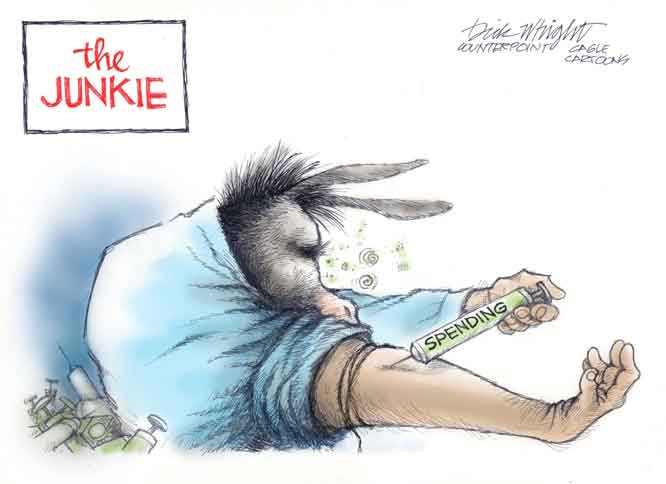
In today's Washington, politicians are quick to give and slow to take. The result is a government that won't push itself back from the table, even though it cannot afford the bill. And this insatiable appetite is fueling an affordability crisis that's putting the American dream further out of reach for hardworking Americans.
Recently, an independent budget watchdog group issued a sobering wakeup call: The U.S. national debt is on track to exceed $56 trillion within the next decade. That is a crippling debt load.
Already, the United States spends more on servicing the national debt — which passed $38 trillion, equal to the entire U.S. GDP, for the first time last year — than it spends on defense spending. Nearly a quarter of those interest payments go to foreign countries, augmenting their economies as ours falls deeper into a hole.
This year the federal government will spend more than $1 trillion just paying down interest, which, if equally distributed, would be equal to more than three months' rent for the average family. Yet, like a teenager with an overdrawn credit card, Uncle Sam continually rolls over that interest, turning it into even greater principal.
This isn't some theoretical problem for Ivy League academics to debate; it's causing real pain for real families, even if they don't know it.
As the debt rises, the government has to issue bonds — effectively, federal IOUs — to finance it. As confidence dwindles in the long-term outlook of those getting repaid (the three major credit-rating agencies all downgraded the U.S. credit score over the last decade), investors demand a higher return, exacerbated even more by the high inflation government spending produces.
These higher rates crowd out investment. Banks and businesses must offer greater returns themselves to attract capital, which ultimately drives up consumer costs. A family seeking a loan, for example, is going to pay a higher rate. Likewise, less money is directed into private companies, slowing economic output.
The latter is something of a self-fulfilling prophecy. A weaker economy drives investors to bonds, a "safer bet," further diverting capital away from the private markets. And, of course, Americans are familiar interest rates. Families are waiting longer than ever to buy a home as loan rates have pushed monthly mortgage costs out of reach.
The solution isn't complicated, but it will take some hard truths.
The government can't continue to spend on credit while ignoring its bills. Lawmakers must get serious about significant program cuts. There can't be any sacred cows. And they must be honest about how they are going to pay for what's being provided — which means, in plain terms, raising revenue to cover costs and begin paying down the debt.
Those aren't popular options. Few politicians have been elected on a promise to take away programs and raise taxes. But it's the tough dose of reality our country needs. And there is more support for it than the men and women out shaking hands and kissing babies might think.
In a recent survey, more than a quarter of Americans said their concerns about the national debt have increased in the last few years. Almost 80% agreed that fixing the problem should be among Congress' and the White House's top priorities.
Sadly, instead, most lawmakers are more interested in keeping their jobs — by promising to keep taxes low while doling out more federal giveaways. Their mantra could very well be, a government program in every pot.
What's certain is, we cannot continue on the same path of unchecked government growth. We are facing a problem that is robbing our working class and digging a hole that our kids may never climb out from. The answer isn't to ignore the challenge; it's to tackle it head-on, even if it's difficult.
America is a country of problem-solvers. We are resilient, and we have always risen to the moment. If you told our grandparents that the country is barreling toward financial default because their elected leaders can't agree on which welfare program to cut, they would tell us tighten our belt, toughen up and vote 'em out if they won't listen. We could use a little of that tough love.
Comment by clicking here.
Ken Buck served in the United States House of Representatives from 2015-2024 representing Colorado's 4th congressional district. He now serves as a Fellow with the Independent Center.
Previously:
• DHS Shutdown Underscores Dems' Immigration Quagmire