



 Contact The Editor
 Articles By This Author
The only thing more dangerous than Davos Man peddling old buzzwords is Davos Man peddling new ones. Canada's Prime Minister Mark Carney was the toast of Davos for his speech on how middle powers can save the liberal order. The New Yorker gushes that the speech is even more impressive in retrospect than it was at the time, describing it as nothing less than a "charter for the bleak years ahead." Carney is off to Australia in March in pursuit of his middle-power policy. The only problem with his idea is that it has a hole in its heart.
Carney's argument is stark: In a world where a rogue America is facing off against an authoritarian China, the only hope is for middle powers to unite in defense of the fading liberal order. The middle powers can club together to save multilateral institutions, promote free trade and safeguard liberal values.
Alas, the problem with the argument is equally stark. Not only is the category of middle powers a heterogeneous one, but some of the middle powers doing the most to make the future are not exactly liberal paragons: royal dynasties such as Saudi Arabia and the United Arab Emirates; authoritarian-leaning giants such as Indonesia and Turkey; and the techno-meritocracy that is Singapore.
These countries all embrace a different model of politics from the one practiced in the liberal West for the past century or so: top-down modernization driven by powerful states controlled by narrow elites. These elites come in different forms: princes, strong men or technocrats. But they all share the belief that they are better at solving the practical problems that matter to regular citizens than are liberal democracies, which, in their view, are plagued by interest groups, paralyzed by self-doubt and bankrupted by welfare commitments. Illiberal powers are so successful at building the future that former desert backwaters such as Dubai are attracting high-net worth individuals, driven out of Europe, and particularly Britain, by punitive tax rates, and ambitious young people, tired of paying high taxes for poor services and dirty streets.
These countries also practice state capitalism rather than liberal capitalism, relying on a combination of techno-industrial policy, sovereign wealth funds and state-owned enterprises (SOEs) to drive development at home and project influence abroad. These companies are, for the most part, far removed from the inefficient monstrosities that used to be associated with the phrase "state-owned." Illiberal modernizers have learned from Singapore (and to some extent China) how to recruit first-class people into the state-controlled sector and hold them to the same standards as private-sector businesses. Dubai Airports and DP World, which respectively run the countries airports and ports, operate like clockwork. Saudi Arabia's Public Investment Fund and Qatar's QIA are intimidatingly successful.
These medium powers calculate, with justification, that state-capitalism is the way of the future. Sovereign Wealth Funds (SWFs) controlled more than $11.8 trillion in 2023, up from $1 trillion in 2000. That's more than hedge funds and private equity firms combined. State-owned enterprises had assets worth $45 trillion in 2020, up from $13 trillion in 2000. That's the equivalent of nearly half of global gross domestic product. Half of the world's 10 biggest companies and 132 of its 500 biggest are SOEs.
These medium powers are also experts at projecting their influence abroad. They practice niche diplomacy by focusing on high-impact areas such as humanitarian aid, renewable energy and health care. Singapore is a model of efficient government that attracts politicians and students of politics from across the world. The UAE is, adjusted for size, one of the world's largest foreign aid donors. They also practice old-fashioned diplomacy by using their power to maximum effect either by organizing regional power blocs, as Singapore did with ASEAN, or, in the case of Saudi Arabia, exploiting their huge weight in global energy markets.
These middle powers are among the world's leading practitioners of the politics of spectacle. Riyadh is challenging Dubai's local pre-eminence in spectacular buildings with a kilometer-tall tower and a six-runway King Salman international airport (designed by the firm of Britain's Norman Foster). The Middle East is also littered with the infrastructure for every sporting event imaginable, from football (Qatar held the 2022 World Cup and Saudi Arabia is preparing to hold the 2034 World Cup) to horse racing, motor racing, golf and tennis.
The best that can be said for these rising middle powers when it comes to Carney's clubbing together strategy is that they might join with Europe and the former Dominions as forces for stability in an unstable world. They frequently act as swing states between China and the US, sometimes dealing with both (trading with China while tapping the US for military protection) and sometimes shifting from one to the other. Saudi Arabia increasingly acts as a force for stability in a Middle Eastern region that threatens to be torn apart by the bitter hostility between Israel and Iran. Global tigers such as Singapore and energy exporters such as the Gulf states have an interest in keeping the global economy whirring.
But even here the reality is frustrating from the Davos perspective. Most obviously, these powers may act as agents of regionalization rather than defenders of globalization. The Gulf countries are investing $250 billion in a Gulf Railway project connecting all six Gulf Cooperation Council states to promote the rapid movement of goods and people across the region. More subtly, they represent more sustained threats to what were once global democratic norms. They are keen on changing the role of the global institutions that were founded after the Second World War, from agents of anti-authoritarian liberal values to, at best, mere problem-solving mechanisms and, at worst, fora for anti-Western agitation. And, if a post-Trump US ever tries to resume its role as a liberal hegemon, they may well find themselves allying more firmly with China.
For the biggest problem with these middle powers lies in their ideological self-confidence. They not only think that they have found a better formula for economic growth and political stability than their liberal rivals. They have a remarkable confidence in the future, demonstrated in giant building projects and swollen sovereign wealth funds, that has been lost in old Europe. These are active history makers, patient and shrewd, who will no longer allow their former colonial masters to dictate the rules of global engagement.
Mark Carney thus got it upside down: Far from identifying a solution to the liberal order's problems, he has inadvertently identified one of its biggest challenges.
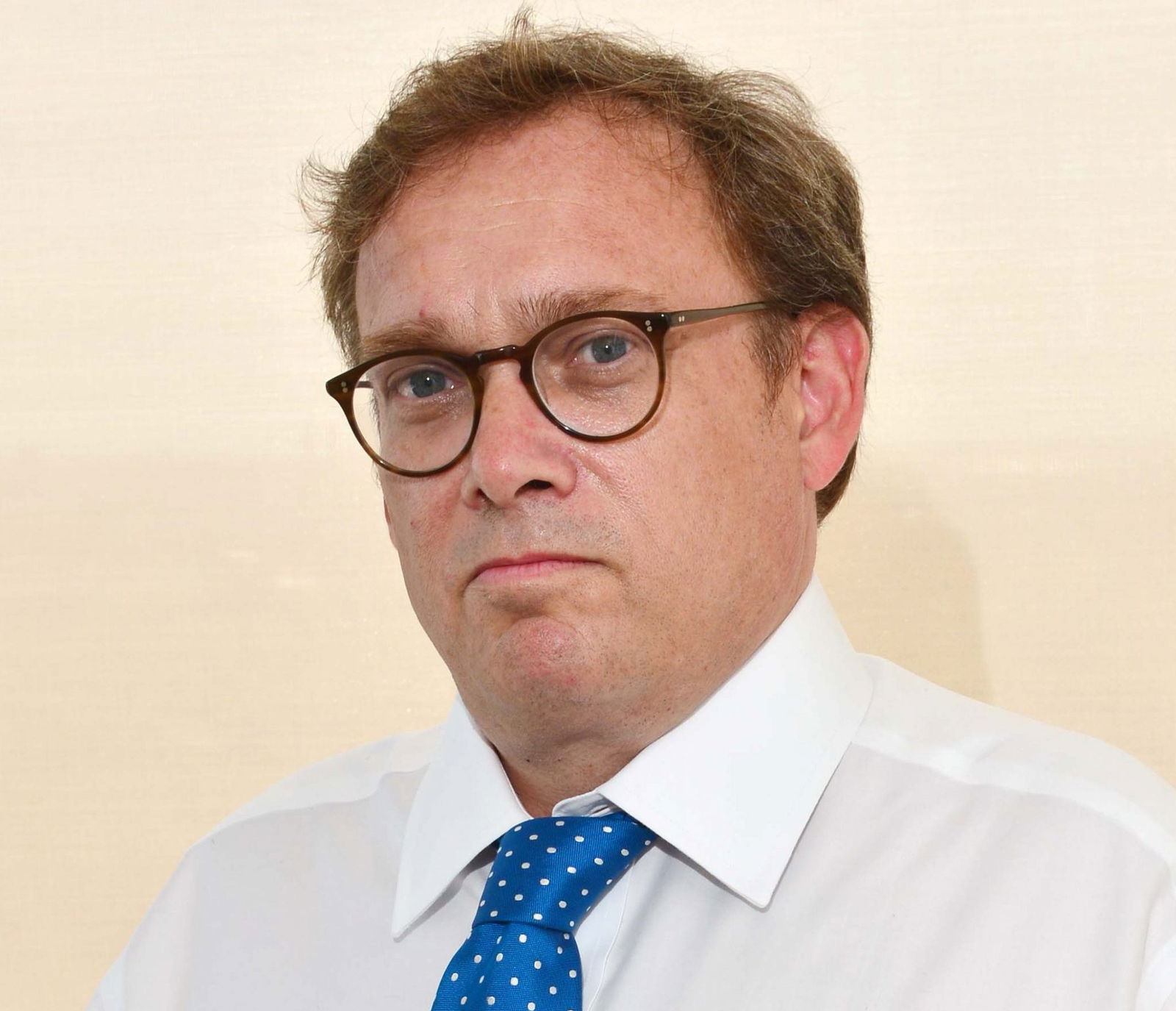
Adrian Wooldridge is the global business columnist for Bloomberg Opinion. He was previously a writer at the Economist. His latest book is "The Aristocracy of Talent: How Meritocracy Made the Modern World."
(COMMENT, BELOW)
Previously:
• The West is facing five fearsome new giants
• 11/07/25: A risky revolution, spreading?
• 10/30/25: The cult of Charles de Gaulle is growing
• 08/05/25: Britain is in the midst of one long, hot, nervous summer
• 07/08/25: The Middle Ages are making a political comeback
• 06/23/25: The arc of history does not simply bend toward justice
• 04/01/25: Making America healthy should be a bipartisan challenge
• 11/27/23: If you want more globalization, build better walls
• 09/06/23: CEOs must soldier on even as AI anxieties loom
• 08/31/23: The incredible shrinking global sea powers
• 06/20/23: If neoliberalism did not exist, we would have to invent it
• 05/02/23: Disruption will always be capitalism's secret sauce
• 05/02/23: What science says about the coronation of Charles III
• 01/04/23: Who are the nepo babies among us?
• 07/13/22: Boris Johnson's fall is populism's latest act of self-destruction
• 06/21/22: The West is facing a followership crisis
• 05/25/22: The 1970s had a big bright side, too
• 05/10/22: Young Americans aren't as woke as you think
• 05/04/22: The furor facing Disney in Florida is a warning that capitalism won't regain its legitimacy by alienating
Insight
At Davos, Canada's PM speech had a big hole in it
By Adrian Wooldridge Bloomberg
Published Feb. 3, 2026