



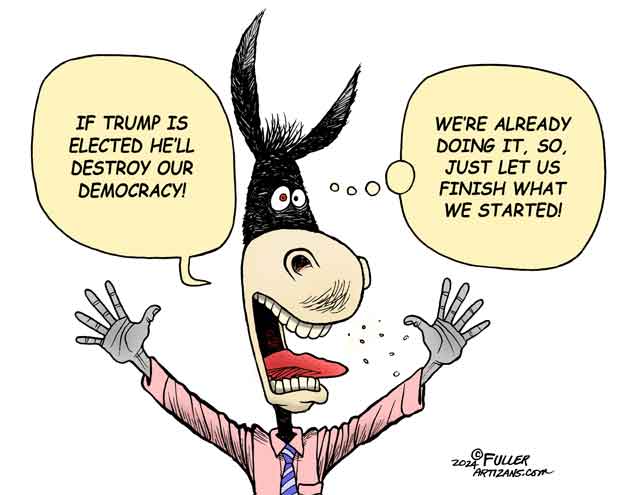
They are banking on this reticence being good for their individual political futures, which is probably true - but it also could prove harmful to the Democratic Party as a whole, which has yet to really find its voice as Republicans command the spotlight with their plans to radically remake the US and its government. Several recent polls show that most Americans approve of the job that Trump is doing - by 53% to 47%, according to a new CBS News/YouGov poll. By contrast, Democrats have achieved new heights of unpopularity, with 57% of Americans having an unfavorable view of the party, according to Quinnipiac.
Governors and mayors, from their perches in blue strongholds, are in a unique position to energize voters and redefine the party, drawing a clear contrast with Republicans. But so far, that's not happening - in part because they need the federal funding that Trump has promised to withhold from states and cities that cross him.
Just consider what's happening in California, which has long prided itself on being a liberal bulwark to Trumpism. Only three months ago, Governor Gavin Newsom was attacking the new president-elect. California's "values" and "freedoms" were at risk, he warned. In response, he called for a special session of the legislature and made a show of lobbying the Biden administration to help "Trump-proof" the state's policies.
And yet, these days Newsom is trying to make peace with Trump. The fires that decimated more than 60 square miles of Los Angeles County have changed everything. California needs federal disaster aid, and lots of it - and Newsom, who is widely expected to run for president in 2028, knows he'll be punished politically if he doesn't deliver.
So, last week, the governor flew to Washington for a 90-minute meeting with the president, which Newsom later described as "positive." He also has kept relatively mum about the many executive orders that Trump has signed, including one that froze federal funding, rattling the leaders of numerous housing, healthcare, education and workforce development programs in California. And to the president's decision to release water from two federal dams, needlessly wasting it, Newsom offered a far more chartable response than the facts merited.
Meanwhile, Los Angeles Mayor Karen Bass, also a Democrat, has publicly thanked Lee Zeldin, the new chief of the Environmental Protection Agency, for his support after the two took a tour of fire-damaged Pacific Palisades. Zeldin is expected to dismantle federal regulations addressing climate change, including for electric vehicles, undermining a major priority for the city and California.
And in San Francisco, home to many of the tech bros who Trump and Elon Musk have recruited to Washington, newly elected Mayor Daniel Lurie also has refrained from provoking the president. Instead, he's has been focused on solving the city's twin crises of homelessness and fentanyl addiction.
I wouldn't say Lurie, Bass and Newsom have bent the knee, exactly. After all, on Friday, the governor signed legislation providing $50 million to continue a successful strategy of fighting Trump in the courts, and both mayors have publicly supported protections for undocumented immigrants. But there has been an obvious vibe shift when compared to Trump 1.0, just as there has been among mayors and governors in many other blue states.
In New York, for example, Governor Kathy Hochul has made it known that she opposes Trump's (probably illegal) plan to end birthright citizenship and revoke the temporary protected status of some immigrants. But she also has met with Trump, in hopes of persuading him not make good on a threat to "kill" Manhattan's congestion pricing program.
Hochul has mostly declined to criticize the president by name, though, warning that the state's $252 billion spending plan - and the lives of millions of New Yorkers - could be upended if an aggrieved Trump decides to cut funding. As she said in January: "I cannot stand here and say the state of New York is going to backfill all the federal dollars. No state can do that."
Her wariness has been echoed by many other ambitious Democratic governors, including Katie Hobbs of Arizona, Jared Polis of Colorado, Tony Evers of Wisconsin and Gretchen Whitmer of Michigan. Even as the Trump administration has moved to freeze federal funding, ramp up deportations and threaten tariffs, most have, at least publicly, continued to strike a conciliatory tone, hoping to find common ground with the president.
And like Bass in Los Angeles, other blue city mayors have been less combative too. During Trump 1.0, for example, then-New York City Mayor Bill DeBlasio often tried to define himself as an oppositional figure to the president. Now in Trump 2.0, Mayor Eric Adams has traveled to Mar-a-Lago and attended last month's inauguration in Washington. Adams, who is running for reelection, is also facing bribery charges and Trump has openly considered pardoning him. On Monday, though, a Trump appointee with the Justice Department requested that federal prosecutors dismiss the charges against Adams, claiming without evidence that they had been filed for political gain
To be sure, not every mayor and governor has been so wishy-washy. In Kentucky, Governor Andy Beshear criticized Trump and Musk over the weekend for trying to eliminate the Department of Education, arguing kids who receive their meals at school would go hungry.
And in Illinois, where the Trump administration has sued over the state's "sanctuary" laws, both Governor JB Pritzker and Chicago Mayor Brandon Johnson have been outspoken critics, even if some of their pushback is largely symbolic: Pritzker, for example, announced that Jan. 6 rioters would be barred from working for state government, Trump pardon or no Trump pardon. He's also resorted to pure trolling, recently going so far as to parody the president's executive order renaming the Gulf of Mexico the Gulf of America, by declaring that Lake Michigan "shall be known as ‘Lake Illinois.'"
Democratic governors and mayors will need more than such broadsides to refashion their party and convince the American people that they have the right solutions for the country. But at least those stunts grab attention. It's pretty hard to win a political argument by staying quiet.
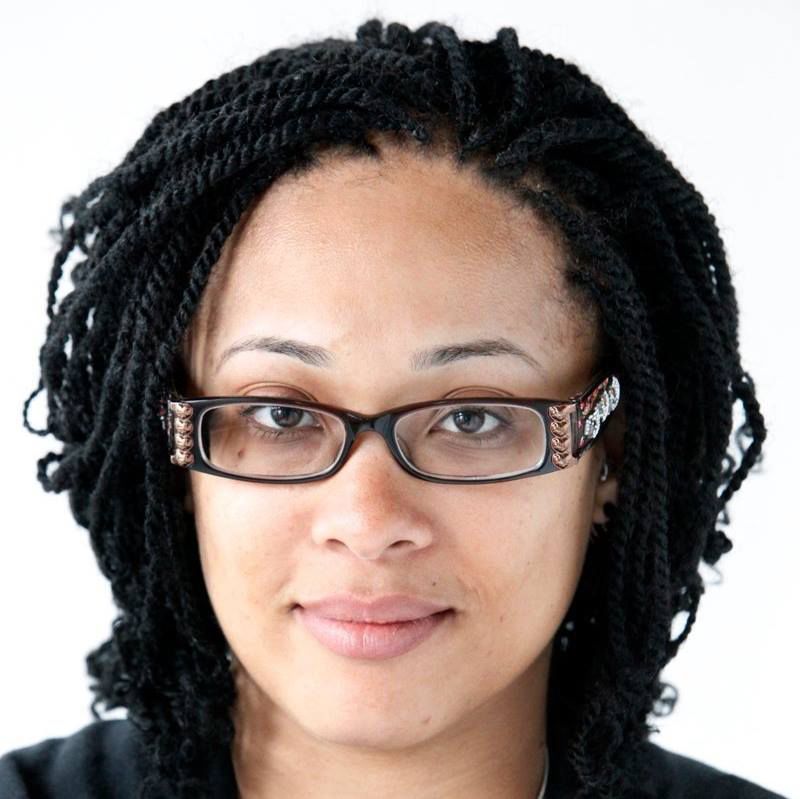
Erika D. Smith is a politics and policy columnist for Bloomberg Opinion.
During Donald Trump's first term as president, Democratic governors and mayors formed the foundation of the "resistance" to the White House. But this time around, many of those same Democrats and their successors have gone silent, or at least quiet. They have been chastened by an uptick of Trump voters in their jurisdictions, distracted by more immediate crises, or are simply hesitant to run afoul of a federal government that they might need. And few want to use that cringey R-word anymore.