
Philip Terzian
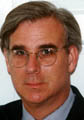

As it happens, the surgeon general is nearing the end of his tenure, and
grasping the pulpit that will soon be snatched away, has taken to making a
series of pronouncements. A few months ago Dr. Satcher warned us that we are
deficient in our knowledge of human sexuality (does he ever watch TV?) and
called for more, and more detailed, sex education in the schools. Now he has
deployed the prestige of his office to warn Americans to lose those extra
pounds -- or else.
On the one hand, it is difficult to take issue with Dr. Satcher's
formula. Anyone who walks down a city street, visits a swimming pool, or
lurks in the vicinity of a buffet table, is aware that many Americans are
heavier than they ought to be. The question is: Does anyone dispute this, or
believe that it is smarter to be stout than slender? Even the stalwart
members of those "fat acceptance" organizations must realize that physicians
don't lecture them about their weight for aesthetic reasons, but because
obesity promotes a host of dangerous conditions: Heart disease, diabetes,
etc.
On the other hand, it is worth wondering what motivates Dr. Satcher.
Part of the problem, I suppose, involves his professional status. A
generation ago the surgeon general was head of the U.S. Public Health
Service, and clad in the standard grey flannel of the species, labored in
near-anonymity in the capital. All of that changed with the invention of Dr.
C. Everett Koop, a pediatric surgeon from Philadelphia, with strong
anti-abortion views and a flair for publicity. Dr. Koop discarded his scrubs
and donned the dress whites and blues of the PHS's crypto-naval uniform,
complete with gold braid and ribbons, and transformed himself into the
nation's "top doctor."
Instead of consulting on morbidity statistics or lobbying Congress for
more research funds, Dr. Koop took to the airwaves and the hustings,
subjecting us all to periodic checkups and lecturing the country on the
perils of AIDS. Since his retirement in 1989, Dr. Koop's successors have all
dutifully outfitted themselves like ships' doctors, and chosen a particular
crisis to address as a prelude to legislative and regulatory action.
The problem with Dr. Satcher's latest pronouncement is not its
obviousness but its implications. In 1964 then-Surgeon General Luther Terry
issued his famous report on smoking and health, and the rest is history. Dr.
Terry may have regarded his work as educational, and intended for his report
to be taken as advice: Smoking, after all, is a choice not a pathogen, and
people must decide to take up the practice. But it formed the basis for what
would later become the federal government's war on a lawful industry, with
draconian legislation, bans on smoking in public, ever-higher taxes, and
colossal lawsuits which have largely served to enrich the tort bar.
No doubt, Dr. Satcher is merely deploying his prestige to give his
fellow countrymen some sensible counsel. So far, no plump taxes are
contemplated, or regulation of the confectionary industry, or tariffs on
sweets, or bans on the advertisement of doughnuts. But don't laugh. Just as
the I'm-fat-and-I'm-proud crowd complain that Americans are bombarded with
commercial imagery of junk food and anorexic fashion models, we can hear the
opening salvos of the next great movement to restrict our freedom to live
life as we see fit.
In a recent column in The Washington Post, two journalists shrieked that
"we are surrounded by tasty, cheap high-fat food, while fruits and
vegetables are comparatively more expensive and less readily available."
This may be true at the local carnival, or McDonald's franchise, but is less
obvious at the grocery store, where most Americans buy their food. Still,
say the authors, there is only one solution: The federal government must
step in and make Americans eat right.
Should it? No one disputes the fact that it is better to eat a healthy,
balanced diet, to consume junk food sparingly, to trade the chocolate for
the salad, and to keep one's weight to a reasonable level. But to grow obese
is a failure of will, not a symptom of the absence of federal regulation. It
is both a strength and weakness of our system that people are free to decide
how they treat themselves, and accept the consequences. We cannot expect
laws restricting the consumption of greasy hamburgers, or bans on sugar, or
confiscatory taxes on starches and fat, to impose the self-discipline we
require to stay healthy. That's the missing ingredient in Dr. Satcher's
http://www.NewsAndOpinion.com --
IN the midst of the season when Americans are settling in
to rationalize an extra slice of fruitcake, or consume more cookies than
they ever expected to eat, along comes the surgeon general to wag his
disapproving finger. In a long, specific and worried report, Dr. David
Satcher tells us that Americans are too fat, and that obesity kills an
estimated 300,000 of us every year.

JWR contributor Philip Terzian is associate editor of The Providence Journal.
Comment by clicking here.
