
David Brooks


http://www.jewishworldreview.com --
THE QUINTESSENTIAL C-SPAN MOMENT came during a Booknotes program in
1991, while host Brian Lamb was interviewing Martin Gilbert, the author
of a biography of Winston Churchill. Gilbert was talking about the
interplay between private scandal and public life when the following
exchange took place:
Gilbert: When Churchill was 20 and a young soldier, he was accused of
buggery, and, you know, that’s, you know, a terrible accusation. Well,
he ended up prime minister for just quite a long time.
Lamb: Why was he accused of buggery and what is it?
Gilbert: You don’t know what buggery is?
Lamb: Define it, please.
Gilbert: Oh dear. Well, I—I’m sorry. I thought the word we—buggery is
what used to be called a—the—an unnatural act of the Oscar Wilde type is
how it was actually phrased in the euphemism of the British papers.
It’s—you don’t know what buggery is?
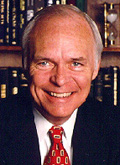
Over the twenty years that C-SPAN has been in existence, its founder
Brian Lamb and his colleagues have pioneered a distinct interviewing
style. The questions are flat, short, and direct. And they are centered
around facts. The guests might be longwinded or erudite or both, but
usually what sets them off is some six-word question about a specific
fact. You get the impression that if Brian Lamb were called in to
interview Jesus the first questions out of his mouth would be: “It’s
said you fed the multitudes with loaves and fish. What kind of fish was
that? How many people does it take to make up a multitude?”
It seems like such an easy thing to ask direct questions about simple
facts. But when you zap up and down the TV dial, you notice that few of
the other talk shows do it. The broadcast network interviewers ask
mostly about emotions and feelings. On many of the cable talk shows, the
host is the star so the questions are really rococo essays that render
the answers superfluous. And when you cast your eye out to the broader
culture, you see even more that curiosity about simple facts has been
submerged amidst the more sophisticated interest in theory and
perceptions.
In Edmund Morris’s notorious biography Dutch, the facts of what Ronald
Reagan did and knew are upstaged by the drama of the author’s own quest
to “understand” and “capture” his subject. And that is just the tip of
the postmodern iceberg. Despite the efforts of E.D. Hirsch and other
cheerleaders for fact-based “cultural literacy,” school curricula no
longer focus on the simple whats, wheres, and whens of history.
University historians are even less interested in that stuff—obsessed as
they are with social forces and group consciousness. Even in a publicly
funded showcase institution like the Smithsonian Museum of American
History, the displays are concerned less with illuminating historical
events or history-making individuals than with lionizing aggrieved
groups.
 |
| Lamb |
This year C-SPAN is running a series called The American Presidents. The network dedicates a few hours of programming each week to describing the life and times of one of our nation’s 41 chief executives, starting with George Washington last March and ending with Bill Clinton on Christmas Eve. Again, the approach is breathtakingly simple. C-SPAN sends two camera crews out to the president’s home or some significant site associated with his life. The Washington segment was filmed at Mount Vernon. A William Henry Harrison segment was filmed at the battlefield at Tippecanoe in Indiana, where Harrison fought the Indians in 1811.
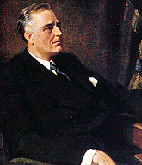
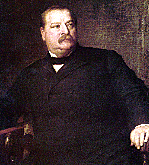
There is a park ranger or local historian to give a tour of the site, usually with a few of those homey anecdotes that are the weakness of historic-home tour guides. There is a short documentary that describes the basic course of each president’s life. That is often followed by an interview with a descendant of the president in question (George Cleveland played his grandfather Grover). With the more recent presidents, there is footage from important moments of their presidencies. Franklin Roosevelt’s first inaugural address was broadcast during the week dedicated to his presidency.
Finally a few historians are brought in to answer questions from the C-SPAN host and the C-SPAN callers. The callers are often self-taught history buffs—someone will call in with a freakishly expert understanding of, say, the election of 1852—or else people with a personal connection to the president in question.
 |
| FDR |
Though Taylor and Davis disagreed furiously about secession, the two men remained close friends even after her death. Taylor fought in the frustrating wars against the Seminoles in Georgia and Alabama. At one point he told the Seminoles that if they surrendered and left disputed territories, they could keep the black slaves who had escaped white slavemasters and fled to their camp. Either you find such bits of data interesting or you do not.
The guide through the life of Taylor was an elderly historian named Elbert Smith, who like many of the historians on the programs seems to exist in a world apart from the theoretical fashions of the day. The program gave us a little more than we need to know on the Wilmot Proviso, but it was fascinating when the coroner of Jefferson County, Kentucky, was brought on to describe the exhumation of Taylor’s body. A historian named Clara Rising, who also appeared on the program, had come to the conclusion that Taylor was poisoned with arsenic. His body was dug up and his fingernails and bones examined, but no sign of arsenic poisoning was found.
The Web site for the series (americanpresidents.org) conveys the flavor of the programs, including private letters from each of the presidents. Here’s a passage from an unlikely love letter written by normally stiff Woodrow Wilson to Edith Bolling Galt a few months before they were married:
My precious Darling,
The more we are together the more I love you, the more I need to have you always with me, and the more inadequate written words become to speak my heart to you—the more impatient I grow of the pen, the more eager to whisper the love that floods my heart into my Darling’s lips as I hold her close in my arms. And yet the more necessary does it become to relieve my heart with some message of love, even if it be only written. Please go to ride with us this evening, precious little girl, so that I can whisper something in your ear—something of my happiness and love.
The descriptions of the presidents on the programs are haphazard, and the information conveyed is out of chronological order—it all depends on the questions from the C-SPAN host or the callers. But in many ways the best part of the series is not the specific treatment of the presidents.
It is the sight of all the historians. Some are eminent, like David McCullough, Robert Remini, or Joseph Ellis, but most are not. They are from obscure colleges, or they eke out a living by writing. What they share is a love of history. The producers have done an outstanding job of choosing historians who seem genuinely curious about the past, rather than merely activists or agitators in historian’s clothing. Nobody is going to get rich or famous writing a book about, say, Grover Cleveland,
 |
| Cleveland |
C-SPAN has managed to find such people all over the country, and many more call in with questions.
It’s hard for impatient people in an impatient age to understand the pleasures that some people feel poring studiously over old documents.
The political theorist William Dunning said that one of the happiest days of his life was the day he discovered, by comparing handwriting samples, that Andrew Johnson’s first message to Congress was actually written by George Bancroft. Dunning wrote to his wife, “I don’t believe you can form any idea of the pleasure it gives me to have discovered this little historical fact.”
One of the best efforts to put this peculiar passion into words comes from the great British historian G.M. Trevelyan (like the Dunning anecdote, it’s found in a Gertrude Himmelfarb essay in a new book called Reconstructing History). Trevelyan wrote:
The appeal of history to us all is in the last analysis poetic. But the poetry of history does not consist of imagination roaming at large, but of imagination pursuing the fact and fastening upon it. That which compels the historian to ‘scorn delights and live laborious days’ is the ardor of his own curiosity to know what really happened long ago in that land of mystery which we call the past.
It’s no accident that on a recent C-SPAN program both Jefferson biographer Joseph Ellis and Lincoln biographer David Herbert Donald confessed they were frustrated novelists. Ellis went on to note that none of the reviewers of his Jefferson biography, American Sphinx, noted the literary device of which he was most proud. He wanted to convey a certain image of his subject, so in every chapter Jefferson is described entering the scene on horseback.
By contrast, turn to the Web site of the American Historical Review (indiana.edu/~ahr) and look at the list of articles the prestigious academic review is publishing or about to publish: “Feminism, Social Science and the Meaning of Modernity”; “The Sensibility of Comfort”; “Culture, Power and Place: The New Landscape of East Asian Regionalism”; “Domesticity and Difference: Male Breadwinners, Working Women and Colonial Citizenship in the 1945 Nigerian General Strike.” The list goes on, a stifling progression of abstruse tedium. A few of the topics might sound interesting—“The Sensibility of Comfort” strikes my fancy—until you remember that most academic historians face professional pressures to write as turgidly as possible, and to excise or exile to the footnotes any of the interesting anecdotes they would use as dinner table conversation. The contrast between the C-SPAN historians and the academic establishment historians is breathtaking.
 |
Not silent enough.
Talking to Brian Lamb about The American Presidents, you are struck by how much he loves the callers. They make the shows spontaneous, he says. They reflect the many different currents in America. They take control of the programs in ways that no one can foresee. For example, callers have continually forced the historians to deal with racial matters, so that race has become the major sub-theme of the series. The presidents who owned slaves or who tolerated slavery are castigated, and the historians often struggle to suggest that viewers shouldn’t rush to impose modern standards on earlier times—with little success.
Lamb is that rarest of creatures, a genuine populist. Many people will think he goes a little overboard in this direction. The callers are often self-absorbed, cranky, or pedantic. They disrupt the story the historians are trying to tell, and make the programs more boring and annoying than they need to be. But you’ve got to cast your lot somewhere. And if the academic establishment, with all its theoretical gasbaggery, is not going to teach history, then the people who will carry on telling the stories of the past will be untrained history buffs and popular historians, detached from the academy and armed merely with the normal human curiosity to know and understand what went on before us.
The success of C-SPAN’s history series reminds us that when one institution in American life stagnates and ceases to fulfill its function—in this case academic history—then a new institution will inevitably arise to fill the need. C-SPAN may be a harbinger of the sort of new educational structures that arise when the universities retreat into themselves and play an ever-diminishing role in national

David Brooks is a senior editor at the Weekly Standard. Send your comments to him by clicking here.

10/26/99: Al Gore, from Dawn to Dusk
10/22/99: The Clintonized Democrats
10/20/99: Our Hysterical President
09/24/99: The Harassment of Gary Bauer
09/24/99: What I Saw at Burning Man
09/20/99: A scenario for last-minute entrants to shake up the 2000 presidential race
09/16/99: A tale of moral dudgeon and posturing in the Clinton era
09/10/99: One Nation Conservatism
09/09/99: Goldsmith's Secrets of Success
08/31/99: Class Warfare in the GOP
08/26/99: America's Leading Conservative
08/20/99: The Case For Censorship
08/19/99: They Say D'Amato
08/13/99: The Agony of Not Being George W. Bush
08/12/99: Iowa Gothic
08/0699: Preschool in the Nanny State
08/04/99: Body Slam
07/30/99: End of the Leave-Us-Alone GOP
07/28/99: Madeleine Albright's Vendetta
07/22/99: Bill Clinton, Historian
07/20/99: The Terrorist Next Door
07/16/99: The Empress of the Empire State