
|
|
|
http://www.jewishworldreview.com --
I RECENTLY RESURRECTED a long-forgotten element of my childhood:
When my sister and I were in our early teenage years, my parents enrolled us
in finishing school.
Every week, we would gather in a makeshift dance studio
with other girls from the neighborhood, and we practiced walking and turning
with books on our heads. Nice girls don't just turn around, our instructor
told us. There is a proper body posture and a methodology to turning,
whether quarter-way, half-way, or completely around (didn't do me too much
good, if truth be told).
To us, this extracurricular activity was but another after-school
chore our parents chose for us, along with piano, drawing, and tennis
lessons. For the latter, I've always thought that my parents, themselves
denied the luxury of such activities, felt it their responsibility to expose
us to the arts (the religion part was covered in the home and with Hebrew
lessons). But finishing school? My family has never been too keen on
snobbism --- or protocol, for that matter. Our music was of the
Sephardic, darbukah-laden type, not the classical type they played in class;
and we were more familiar with belly dancing than any type of polished walk.
In short, there couldn't have been a starker contrast. Perhaps lessons in
American refinement, for that must be what my parents perceived these
classes to be about, would bridge the gap. Not that my parents sought to
dismiss our ethnicity; to the contrary, it was constantly reinforced. But a
dose of Americanisms could
go a long way toward feeling at home in a new country.
When I think about Chanukah, the same thought about the appeal of
acculturation comes to mind. I've never really known what to make of
Chanukah. In France, where I spent much of my childhood, Chanukah is treated
as a minor holiday; gift-giving is kept to a minimum (certainly, there is no
custom of eight gifts for the eight nights of Chanukah) and there is little
hoopla and awareness of the holiday in general society.
Yet, at the same time, it strikes me as particularly appropriate
that American Jews have claimed Chanukah as their own, for the holiday does
reflect the American Jewish experience. Chanukah commemorates the Jewish
victory over the Syrian-Greeks, who sought to Hellenize the Jews. The
victory was assured once the Jews regained control of the Temple, the
then-central institution of Jewish life, and freed it from foreign worship.
Chanukah, then, affirms two important values: the right to practice one's
religion in peace and security, and the inappropriateness of
government-imposed worship.
The question for me becomes how to observe Chanukah. If I combine my
American nationality with my French upbringing and my Moroccan ancestry
(what a tribute to the 'wandering Jew' phenomenon!), I'll celebrate it with
a sense of gratitude for the freedom to mark the holiday with as much or as
little fanfare as I wish-and with some good ethnic food, of
Jewish World Review Dec. 8, 1999 / 29 Kislev, 5760
 Finishing school...
and Chanukah
By Brigitte Dayan
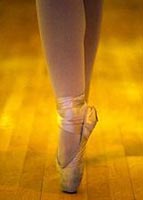
 I asked my mother recently why she and my father enrolled us in finishing
school, and she shrugged and responded that they thought it would be a good
idea because the other girls in the area were taking these lessons. It
strikes me, though, that my parents' underlying motive may have been one of
acculturation. Finishing school, to my mind, is quintessentially un-Jewish;
it's Old Money and establishment, and we, on the other hand, were
transplanted Jewish-French Moroccans in Chicago.
I asked my mother recently why she and my father enrolled us in finishing
school, and she shrugged and responded that they thought it would be a good
idea because the other girls in the area were taking these lessons. It
strikes me, though, that my parents' underlying motive may have been one of
acculturation. Finishing school, to my mind, is quintessentially un-Jewish;
it's Old Money and establishment, and we, on the other hand, were
transplanted Jewish-French Moroccans in Chicago.
 Yet, American Jews celebrate Chanukah with much more fanfare. Here, Chanukah
is a major holiday, not only in our minds but in those of our non-Jewish
neighbors as well. Could it be that American Jews, seeing the prevalence of
Christmas in American society, found Chanukah, with its close proximity to
Christmas, to be a good means of fitting in? Augmenting the status of
Chanukah enables us-the larger society-to wish each other "happy holidays"
around this time of year. It's had an inclusive effect, and that's no small
matter. So I can't help but wonder if Chanukah would have similar appeal if
it were positioned, say, around August. I think it's fair to say it would
not. And that being so, the skeptic in me recoils that we celebrate Chanukah
largely as a reaction to Christmas.
Yet, American Jews celebrate Chanukah with much more fanfare. Here, Chanukah
is a major holiday, not only in our minds but in those of our non-Jewish
neighbors as well. Could it be that American Jews, seeing the prevalence of
Christmas in American society, found Chanukah, with its close proximity to
Christmas, to be a good means of fitting in? Augmenting the status of
Chanukah enables us-the larger society-to wish each other "happy holidays"
around this time of year. It's had an inclusive effect, and that's no small
matter. So I can't help but wonder if Chanukah would have similar appeal if
it were positioned, say, around August. I think it's fair to say it would
not. And that being so, the skeptic in me recoils that we celebrate Chanukah
largely as a reaction to Christmas.  We Jews in America, thank G-d, have the freedom
to practice our religion. At the same time, we have fought diligently to
keep religion and government separate. Perhaps our history, then, has
created a special resonance with the holiday of Chanukah.
We Jews in America, thank G-d, have the freedom
to practice our religion. At the same time, we have fought diligently to
keep religion and government separate. Perhaps our history, then, has
created a special resonance with the holiday of Chanukah.
JWR contributor Brigitte Dayan is managing editor of the
JUF News, a monthly published by the Jewish Federation of Metropolitan Chicago. Contact the author or the magazine by either clicking here, or calling (312) 444-2853.

